Composter Fill Chance by Item Type
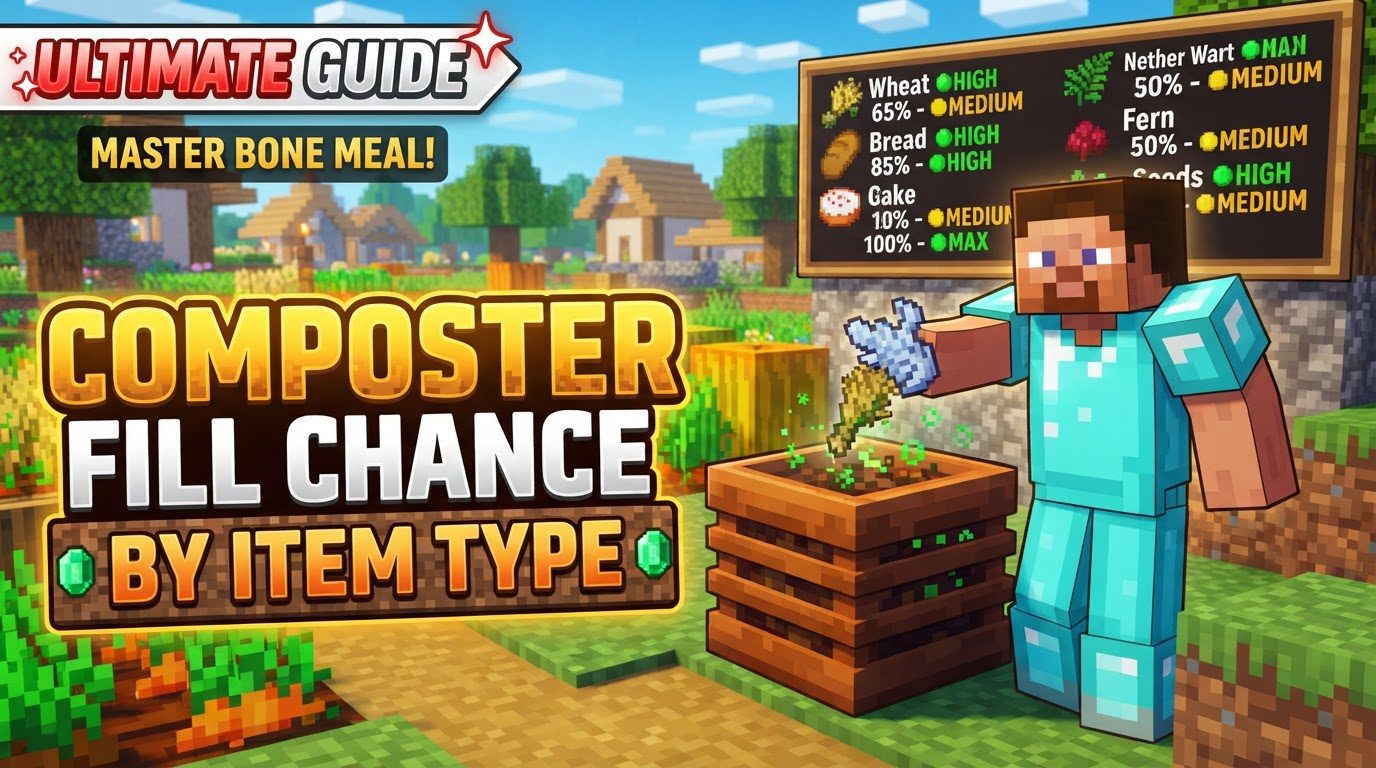
Composters in Minecraft are invaluable utility blocks, transforming organic materials into bone meal, a crucial item for accelerating crop growth and plant development. However, the efficiency of this transformation isn’t uniform; each compostable item carries a specific “fill chance” that dictates how likely it is to advance the composter’s progress towards producing bone meal. Understanding these varied chances is fundamental to maximizing your bone meal output and streamlining your agricultural endeavors.
The Composter’s Inner Workings
At its core, a composter functions as a seven-layered system. When a compostable item is successfully added, it advances one layer. Once the seventh layer is reached, the composter becomes full, signaling it’s ready to yield one unit of bone meal. This process then resets, allowing for continuous production. Crafting a composter is straightforward, requiring seven wooden slabs of any type arranged in a U-shape on a crafting table. Once placed, its fullness can be observed visually through changing textures, or by a Redstone comparator, which emits a signal strength proportional to its current fill level, reaching a maximum of 8 when bone meal is ready for collection.
Beyond its primary function, the composter also serves as a job site block for Farmer villagers, providing them with a profession. For those looking to automate, hoppers prove incredibly useful. Items can be fed into the composter automatically from above, while another hopper placed underneath can collect the produced bone meal, creating a self-sustaining system often found near large-scale farms.
Mastering the Layers: Item Fill Chances Explained
The key to an efficient composting operation lies in knowing which items offer the best chances of increasing the composter’s level. These chances are expressed as percentages, indicating the likelihood that a given item will successfully contribute to filling the composter. When an item is successfully added, green particles will appear, confirming the level increase.
Guaranteed Progress: 100% Chance Items
These items are the gold standard for composting, as they are guaranteed to advance the composter’s level with every addition. They are perfect for quickly filling the composter or for when you have an abundance of them.
- Cake
- Pumpkin Pie
Highly Efficient: 85% Chance Items
These items offer a very high probability of success, making them excellent choices for consistent bone meal production, especially if you have a reliable source for them.
- Baked Potato
- Bread
- Cookie
- Flowering Azalea
- Hay Bale
- Mushroom Block
- Nether Wart Block
- Pitcher Plant
- Torchflower
- Warped Wart Block
Solid Contributors: 65% Chance Items
While not as reliable as the higher-tier items, this category still provides a good return and often includes common farm produce, making them practical for large-scale operations where sheer volume can compensate for slightly lower individual efficiency.
- Apple
- Azalea
- Beetroot
- Big Dripleaf
- Carrot
- Cocoa Beans
- Fern
- Flowers
- Fungi
- Large Fern
- Lily Pad
- Melon
- Moss Block
- Mushrooms
- Mushroom Stem
- Nether Wart
- Pale Moss Block
- Potato
- Pumpkin
- Crimson Roots
- Warped Roots
- Sea Pickle
- Shroomlight
- Spore Blossom
- Wheat
- Wither Rose
Every Bit Helps: 30% Chance Items
These items have a lower chance of success, meaning you’ll need to feed more of them into the composter to achieve a level increase. They are best used when you have a surplus of these specific resources or when higher-tier items are scarce, as even a 30% chance is better than nothing.
- Beetroot Seeds
- Bush
- Cactus Flower
- Dried Kelp
- Firefly Bush
- Glow Berries
- Grass Block
- Hanging Roots
- Kelp
- Leaves
- Leaf Litter
- Mangrove Propagule
- Mangrove Roots
- Melon Seeds
- Moss Carpet
- Pale Hanging Moss
- Pale Moss Carpet
- Pink Petals
- Pitcher Pod
- Pumpkin Seeds
- Saplings (all types)
- Seagrass
- Short Grass
- Short Dry Grass
- Small Dripleaf
- Sweet Berries
- Tall Dry Grass
- Torchflower Seeds
- Wheat Seeds
Bedrock Edition Optimization
A unique quirk in Bedrock Edition allows for a small but significant optimization: the very first item added to an empty composter always has a 100% chance of increasing the compost level from 0 to 1. Savvy players can exploit this by using a low-tier, 30% chance item for this initial step, reserving more efficient items for subsequent layers and thus conserving valuable resources for further composting.
Strategic Composting: Tips for Efficiency
To truly master composting, integrating it intelligently into your Minecraft world is key. Here are some tips to maximize your bone meal yield:
- Automate Your Systems: Utilize hoppers to feed items into the composter from chests or directly from farms, and another hopper below to collect the bone meal. This creates a hands-off, continuous production line, especially effective with mob farms that drop seeds or plant matter.
- Integrate with Farms: Place composters strategically within or adjacent to your farms. Excess crops, seeds, or plant matter can be immediately converted into bone meal, which can then be used to accelerate future harvests, creating a powerful feedback loop that boosts agricultural output.
- Prioritize High-Chance Items: Whenever possible, use items with 85% or 100% fill chances to quickly fill your composter. Reserve lower-chance items for when you have a surplus or as fillers if higher-tier items are scarce, ensuring a balanced approach to resource management.
- Keep Them Full: A composter only produces bone meal when it reaches its seventh layer and is then interacted with. Ensure your systems are designed to keep composters constantly processing items to prevent production halts and maintain a steady supply of bone meal.
Avoiding Common Composting Mistakes
Even seasoned players can fall into traps that reduce composting efficiency. Be mindful of these common pitfalls:
- Mismanaging Item Efficiency: Relying heavily on low-efficiency items when more potent options are readily available can drastically slow down your bone meal production. Always consider the fill chance of the items you’re using and adjust your strategy accordingly.
- Ignoring Automation Potential: Manually feeding composters and collecting bone meal is tedious and inefficient. Embrace hoppers and Redstone to free up your time for other endeavors, turning a manual chore into an automated asset.
- Forgetting to Collect Bone Meal: A full composter that hasn’t had its bone meal collected will cease to function. This is a common oversight that halts all production, making it crucial to have an automated collection system or to regularly check your composters.
- Lack of Integration: Viewing composting as a standalone activity rather than an integral part of your farming or resource management system means missing out on significant synergistic benefits that can enhance your entire base.
- Attempting the Impossible: Not all items are compostable. Avoid wasting resources by trying to compost non-biological items or specific organic items like meat, fish, rotten flesh, poisonous potatoes, or dead bushes. These will simply be consumed without contributing to the composter’s level.
By understanding the mechanics of composter fill chances and implementing smart strategies, you can transform your excess plant matter into a steady supply of bone meal, significantly boosting your agricultural output and overall resource management in Minecraft.
Tags:
YOU MAY ALSO LIKE...