

Create Renewable Netherite
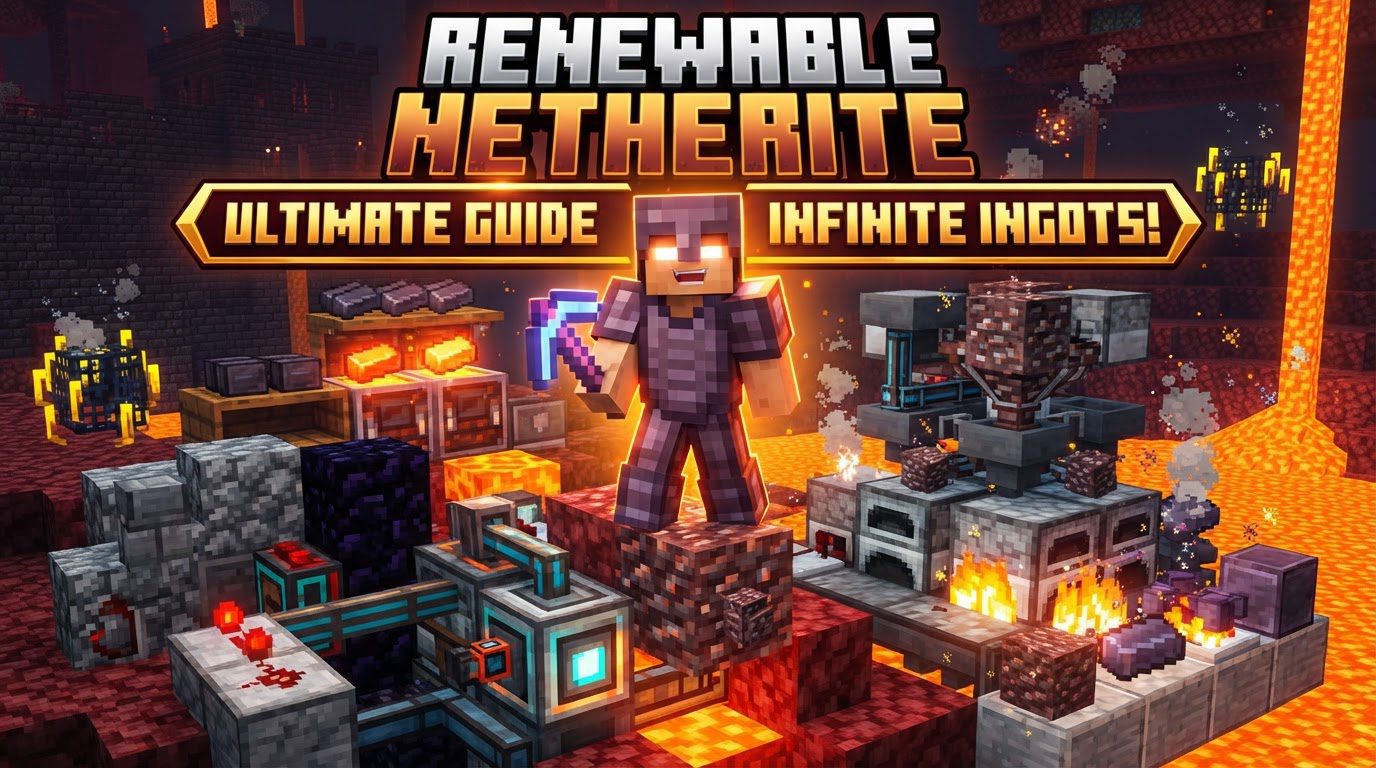
Netherite, the pinnacle of equipment in Minecraft, is categorically not a renewable resource in the vanilla game. This truth often surprises players who are accustomed to renewable resources for almost everything else. The primary component for Netherite, Ancient Debris, does not naturally regenerate once mined from the Nether. However, the concept of “renewable Netherite” is not entirely mythical; it exists exclusively within the realm of specific Minecraft mods and data packs, which introduce custom mechanics to make this sought-after material farmable.
Understanding Netherite in Vanilla Minecraft
Before diving into modded solutions, it’s crucial to understand how Netherite functions in its purest form. Netherite is the highest tier of gear, superior to diamond in durability, enchantability, and knockback resistance. Its components are found exclusively in the fiery depths of the Nether dimension.
The Elusive Ancient Debris
The journey to Netherite begins with Ancient Debris. This rare block is the bedrock of all Netherite production. It generates between Y-levels 8 and 22 within the Nether, with Y=15 being the most common and efficient level for discovery. Unlike other ores, Ancient Debris appears in small veins of 1 to 3 blocks and is never exposed to air, meaning you’ll always have to dig through Netherrack or other Nether blocks to find it. To successfully mine Ancient Debris, you’ll need a diamond or Netherite pickaxe; anything less will destroy the block without dropping it.
From Debris to Ingot: The Processing Chain
Once you’ve gathered Ancient Debris, a multi-step process transforms it into usable Netherite:
- Smelting: Each block of Ancient Debris must first be smelted in a furnace or blast furnace. This yields Netherite Scraps. Blast furnaces are significantly faster for this task.
- Crafting: Four Netherite Scraps are then combined with four Gold Ingots on a crafting table to create one Netherite Ingot. This means you’ll need a substantial supply of gold, in addition to the Ancient Debris.
- Upgrading Gear: Finally, Netherite Ingots are used to upgrade existing diamond armor, tools, and weapons. This is done at a Smithing Table. Simply place a diamond item and a Netherite Ingot into the table’s slots, and you’ll receive the upgraded Netherite version. The original enchantments and durability of the diamond item are preserved.
The “Renewable Netherite” Phenomenon: Modded Solutions
Given Netherite’s non-renewable nature in vanilla, the desire for a sustainable source led to the creation of various mods and data packs. These community-driven additions introduce novel ways to acquire Netherite components without exhausting your world’s finite supply of Ancient Debris.
There is no native method to renew Netherite in vanilla Minecraft. However, specific Minecraft data packs and mods, such as “Create: Renewable Netherite” or “Renewable Netherite & Diamonds,” are designed precisely to address this limitation. These modifications introduce custom crafting recipes or alternative acquisition mechanisms that allow players to generate Netherite indefinitely.
How Modded Renewability Works
The exact methods for renewing Netherite vary widely depending on the specific mod or data pack installed. Common approaches include:
- Custom Crafting Recipes: Some mods introduce new crafting recipes that allow players to create Ancient Debris or Netherite Scraps from more common, renewable resources. These might involve combining items like Gilded Blackstone, Netherrack, Basalt, Lava, or even rare items like Nether Stars. The complexity of these recipes often scales with the value of Netherite, ensuring it remains a challenging yet achievable endgame goal.
- Automated Production Systems: More advanced mods might integrate Netherite into complex automated systems. For example, some might allow for the generation of Ancient Debris through specific block interactions, fluid dynamics (like lava and water, but in a modified context), or even through advanced machinery that processes other Nether-specific blocks into Netherite components.
- Piglins and Bartering: While Piglins in vanilla Minecraft can trade for various items, they don’t offer Ancient Debris or Netherite. Some mods extend the Piglin bartering system to include Netherite-related items, making them a renewable source if you can continuously provide gold.
It is crucial for players interested in renewable Netherite to understand that these features are entirely dependent on installing the correct modifications. Without them, any attempt to farm Netherite will eventually lead to the depletion of available Ancient Debris within your explored chunks.
Optimizing Ancient Debris Acquisition in Vanilla
Even if you’re not using mods, efficient mining techniques can make the finite supply of Ancient Debris feel almost limitless in a large world. Here are proven strategies:
Explosive Mining with Beds
One of the most effective and widely used methods for finding Ancient Debris involves using beds as explosives. Beds explode violently when used in the Nether, destroying large areas of Netherrack and revealing hidden Ancient Debris. To do this safely:
- Dig a 1×2 tunnel at Y=15.
- Place a bed at the end of the tunnel.
- Place a block (like Netherrack) between yourself and the bed.
- Right-click the bed to ignite it, then quickly retreat behind your protective block. The explosion will clear a significant area.
- Repeat the process, moving forward into the newly cleared space.
- Always bring plenty of beds and ensure you have a clear escape route or protective barrier to avoid dying in the blast.
Traditional Strip Mining
For a more controlled approach, strip mining remains viable. Tunneling in straight lines at Y=15, with branches every few blocks, can uncover many Ancient Debris veins. While slower than explosive mining, it’s safer and requires fewer resources beyond pickaxes.
Essential Preparations for the Nether
- Fire Resistance Potions: These are non-negotiable. Lava pockets are incredibly common, and falling into lava without protection is a quick death. Netherite itself is immune to lava, but you are not.
- High-Efficiency Pickaxe: A diamond or Netherite pickaxe with Efficiency V is paramount. For peak performance, combine this with a Haste II beacon effect to instantly mine most Nether blocks and quickly expose Ancient Debris.
- Storage and Repairs: Bring shulker boxes for extended trips and an Mending pickaxe (or spare pickaxes) to handle the extensive mining.
- Safe Base: Establish a small, secure base in the Nether for respawn and storage, complete with a portal back to the Overworld.
Common Misconceptions and Clarifications
The topic of “renewable Netherite” often leads to misunderstandings, primarily due to the stark difference between vanilla and modded gameplay:
- Netherite is NOT Renewable in Vanilla: This is the most crucial point. Ancient Debris does not respawn, nor can it be crafted from other vanilla resources without mods.
- Mining at Incorrect Y-Levels: Many players, used to Overworld ore generation, make the mistake of mining too high in the Nether. Ancient Debris is concentrated at lower Y-levels, especially Y=15, not higher up.
- Using the Wrong Pickaxe: Only a diamond or Netherite pickaxe can successfully mine Ancient Debris. Iron or lower-tier pickaxes will destroy the block without dropping anything.
- Confusing Vanilla with Modded Features: A significant portion of online discussions about “renewable Netherite” refers to custom additions from mods or data packs, not the base game. Always clarify the context when discussing renewability.
In conclusion, while the dream of a perpetually replenishing supply of Netherite is unachievable in standard Minecraft, the innovative spirit of the community has provided solutions through mods and data packs. For vanilla players, mastering efficient mining techniques remains the path to acquiring this powerful material, transforming a finite resource into a substantial one through diligent exploration and smart strategy. For those seeking true renewability, the modding scene offers diverse and creative avenues to achieve a sustainable Netherite economy.
Tags:
YOU MAY ALSO LIKE...


