Hidden Mechanics of Campfire Smoke Spread
Did you know that a simple hay bale can make your Minecraft campfire smoke plume shoot nearly five times higher than normal, turning a cozy glow into a towering beacon visible across vast distances? While campfires are common decorative and utility blocks, their smoke mechanics harbor surprising depth, offering creative builders and survivalists alike a powerful tool for communication, decoration, and navigation.
The Essence of Campfire Smoke
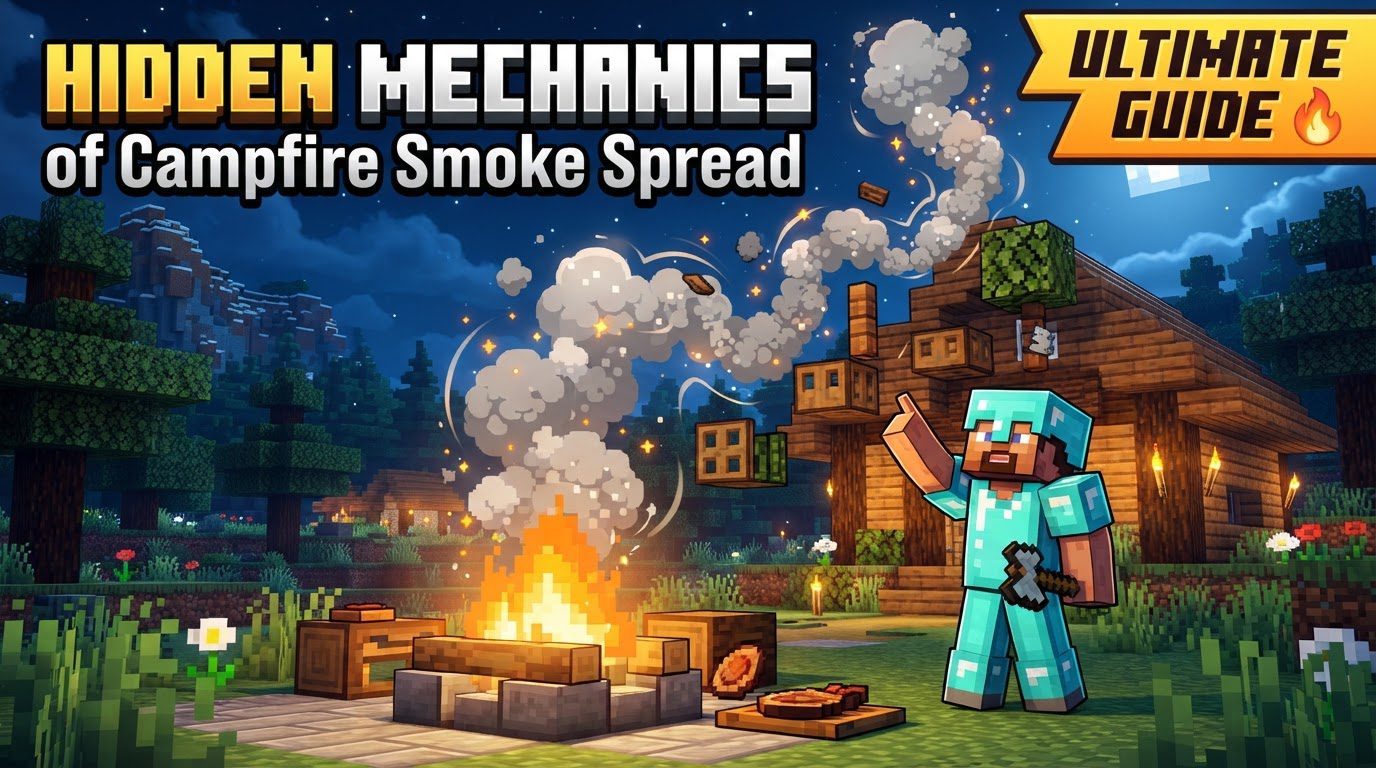
At its core, campfire smoke in Minecraft is a visual effect generated by both regular campfires and their eerie counterparts, soul campfires. While soul campfires emit a bluish flame, a lower light level, and deal more damage, their fundamental smoke-producing behavior is largely identical. By default, when a campfire is lit, a steady stream of smoke particles rises vertically from its center, reaching an approximate height of 10 blocks before gradually dissipating into the virtual atmosphere. This modest plume is often sufficient for local visibility, but its true potential lies in understanding how to manipulate its spread and visibility.
Amplifying Your Signal: The Hay Bale Mechanic
One of the most impactful yet often overlooked mechanics involves the humble hay bale. Placing a hay bale block directly underneath a campfire acts as a powerful amplifier for its smoke. Instead of the standard 10-block ascent, the smoke plume will dramatically increase its height, reaching approximately 24 blocks. Some players even report seeing it extend up to 45 blocks, making it an incredibly effective “signal fire” that can be spotted from a significantly greater distance. This simple trick transforms a subtle visual cue into an unmistakable landmark, invaluable for marking bases, mining entrances, or rendezvous points in multiplayer worlds.
Controlling the Flow: Blocking and Modifying Smoke
While making smoke taller is useful, sometimes you need to manage its presence more precisely. Minecraft offers several methods to block, reduce, or even entirely remove campfire smoke, catering to aesthetic preferences or functional requirements.
Complete Smoke Suppression
- Trapdoors: Placing a trapdoor directly above a campfire is an excellent way to block all smoke. This is particularly useful because trapdoors can be opened and closed, allowing for redstone-controlled toggling of smoke visibility. Imagine a hidden base entrance revealed by the sudden appearance of smoke!
- String: For a more discreet solution, a single piece of string placed directly on top of a campfire will completely prevent any smoke from being produced. This allows you to have a lit campfire for its light or cooking properties without the visual clutter of smoke.
- Specific Block Placements: Interestingly, placing a campfire over certain blocks, such as moss (or other blocks that fit within the campfire’s hitbox), might prevent it from creating smoke particles altogether. This can be a niche but effective method for decorative applications where the campfire’s glow is desired but smoke is not.
Navigating Non-Full Blocks
The interaction of smoke with non-full blocks introduces an element of inconsistency that can be both challenging and creatively rewarding. Smoke from campfires can pass through certain non-solid blocks, such as glass panes or fences, maintaining its upward trajectory. However, it will be stopped by solid blocks like dirt or stone. The behavior with other non-full blocks – including carpets, stairs, slabs, and brewing stands – is less predictable.
Generally, smoke may pass through a single non-full block placed directly above the campfire, provided the block above that is air. However, if there are multiple non-full blocks stacked, or if the arrangement is complex, the smoke can be stopped. This inconsistency means that while you might expect smoke to always pass through a carpet, it might not if another non-full block is situated just above it. Experimentation is key when designing structures that interact with smoke using these block types.
Specific Bedrock Edition Interactions
Players on Bedrock Edition have an additional tool for smoke control: the pressure plate. In this version of the game, a pressure plate placed directly above a campfire can effectively block its smoke. This offers another compact and potentially redstone-compatible method for smoke manipulation unique to Bedrock players.
Understanding Render Distances and Production Limits
While a towering smoke plume from a hay-bale-boosted campfire might seem like an endless beacon, there are important limitations regarding its production and rendering. Smoke particles are only actively produced when a player is within approximately 48 blocks of the campfire. Beyond this range, the campfire still exists and functions, but it will not generate new smoke particles. However, once produced, visible particles might extend further, and the maximum particle render distance in the game is 100 blocks. This means you could potentially see a smoke plume from a distance even if you’re outside the 48-block production radius, as long as you’re within the 100-block rendering limit and the particles were generated while a player was closer. This distinction is crucial for understanding how far your signal fires will truly be visible and reliable.
Practical Applications and Creative Uses
The hidden mechanics of campfire smoke open up a world of possibilities for Minecraft players:
- Signal Fires: As highlighted, placing a hay bale under a campfire creates an unmistakable waypoint, visible from afar. This is invaluable for multiplayer servers, marking bases, or guiding new players.
- Navigation Beacons: In vast, unexplored terrain, a series of smoke signals can create a breadcrumb trail back to safety.
- Decorative Elements: Controlling smoke with trapdoors or string allows for nuanced atmospheric effects. Imagine a chimney that only smokes when a certain redstone condition is met, or a subtle, smokeless campfire within an indoor build.
- Redstone Contraptions: The ability to toggle smoke with redstone-controlled trapdoors offers potential for complex signaling systems or dynamic environmental effects.
- Hidden Features: Using string to remove smoke can make a campfire’s light source less conspicuous, perfect for hidden lighting.
Extinguishing and Relighting
Sometimes, a temporary signal is all that’s needed. Campfires can be easily extinguished by flowing water or by splashing them with a water bottle. An extinguished campfire can then be re-lit using flint and steel or fire charges, providing a renewable and controllable light and smoke source. This adds another layer of dynamic control to your campfire setups, allowing for timed signals or temporary markers.
Dispelling Common Myths
It’s important to clarify a few common misunderstandings regarding campfire smoke. The inconsistent behavior of smoke passing through non-full blocks is frequently a point of confusion; while it can pass through one such block, it’s not a guarantee for multiple layers or certain block combinations. Always test your specific setup. Furthermore, the distinction between smoke particle production range (48 blocks) and rendering range (100 blocks) is vital. Just because you can theoretically see particles from 100 blocks away doesn’t mean the campfire is constantly producing them if no player is within 48 blocks. Understanding these nuances ensures more reliable and effective use of campfire smoke in your Minecraft adventures.
By mastering these hidden mechanics, you transform the simple campfire from a basic utility into a versatile tool for communication, navigation, and creative expression within the blocky world of Minecraft.
Tags:
YOU MAY ALSO LIKE...