Boosting Bone Meal Success Rate on Crops, Explained
Understanding Bone Meal Mechanics for Enhanced Crop Growth
Bone meal stands as a fundamental agricultural tool in Minecraft, serving as a powerful fertilizer that significantly accelerates the growth stages of a diverse array of plants and fungi. Mastering its application and generation is key to efficient farming operations. While its primary function is to advance plant growth, the precise effects and required quantities can vary substantially depending on the specific plant species.
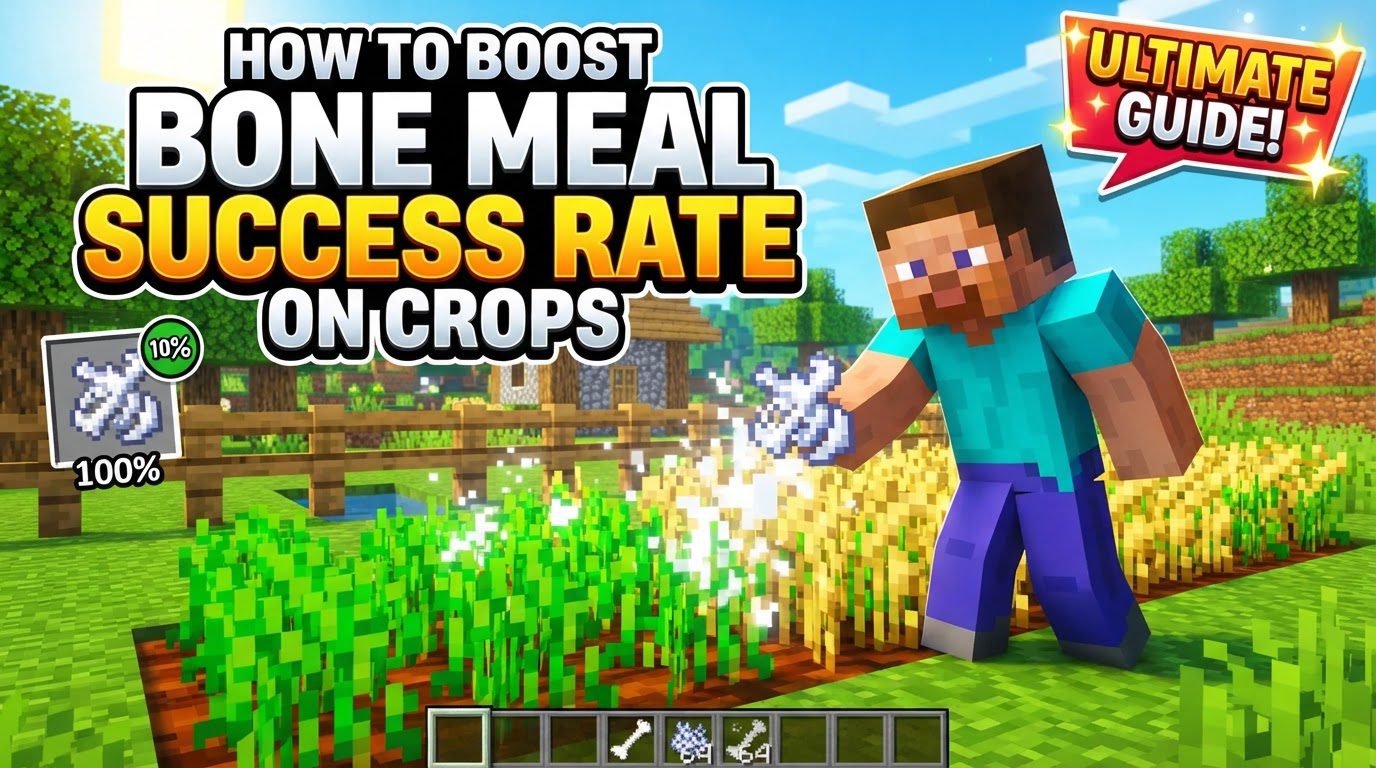
Generally, common crops such as wheat, carrots, and potatoes typically require an average of 2 to 5 bone meal applications to reach full maturity. Larger botanical structures, like trees, naturally demand more bone meal to complete their growth cycle. A visual cue for successful application is the appearance of vibrant green particles around the plant, indicating that the bone meal has been consumed and has had an effect.
The efficacy of bone meal is not uniform across all plant types. For instance, while it can progress wheat, carrots, and potatoes by 2 to 5 growth stages per application, beetroots have a 75% chance of advancing with each use. Bamboo, another fast-growing plant, will extend by 1 to 2 stems when bone meal is applied. However, it is crucial to understand that certain plants are entirely unresponsive to bone meal. This includes common blocks like cactus, decorative elements such as vines, and specialized crops like nether wart. Applying bone meal to these particular items will result in a wasted resource, as they will not exhibit any growth acceleration.
Manual Bone Meal Application: A Step-by-Step Guide
For players preferring a hands-on approach or when setting up initial farms, understanding the manual application process for bone meal is essential. This method provides direct control over individual crop growth.
- Obtaining Bone Meal: The foundational step involves acquiring bones, primarily by defeating skeletons encountered in the game world. Alternatively, bone meal can be directly collected from composters, which convert organic materials into bone meal. In Java Edition, killing fish can also yield bone meal, offering an additional source.
- Crafting Bone Meal: Once bones are acquired, they must be converted into bone meal. This is done by placing bones in any slot of a crafting grid. Each bone successfully yields 3 units of bone meal, making it an efficient conversion process.
- Planting Your Crops: Before bone meal can be applied, the desired crop must be planted. For most standard crops like wheat, carrots, or potatoes, this involves tilling a block of dirt into farmland using a hoe, and then planting the seeds or crop item on the tilled block.
- Applying Bone Meal: With the crafted bone meal in your active hotbar slot, simply right-click on the newly planted or partially grown crop. As mentioned, green particles will confirm a successful application.
- Repeating the Process: Since most crops require multiple applications, continue right-clicking on the crop with bone meal until it reaches its final, harvestable growth stage. This repetitive action is characteristic of manual bone meal farming.
Maximizing Bone Meal Efficiency and Production
To truly boost your bone meal success rate and overall farming output, adopting efficient strategies for both its application and generation is paramount. These tips aim to reduce waste and ensure a steady supply of this valuable fertilizer.
- Automated Growth Systems: For players seeking rapid and hands-free farming, constructing automated systems is highly recommended. These systems typically involve dispensers filled with bone meal, strategically placed to target crops. They are activated by observers, which detect changes in the crop’s growth state (or when a new crop is planted), triggering the dispenser to instantly apply bone meal. This allows for continuous, high-speed crop maturation as soon as they are planted.
- Optimal Growing Conditions: While bone meal directly accelerates growth, ensuring crops are in optimal natural growing conditions can subtly reduce the amount of bone meal required. For instance, crops planted on tilled farmland adjacent to a water source block will naturally grow faster. This natural growth effectively means fewer bone meal applications are needed to reach full maturity, conserving your supply.
- Efficient Bone Meal Farms with Composters: A consistent and renewable source of bone meal is vital. Composters are key to this, converting various organic items into bone meal. To maximize output, focus on feeding composters with high-yield compostable items. Examples of such items include baked potatoes, cookies, bread, and pumpkin pie. These items fill the composter more effectively, leading to a faster and more abundant production of bone meal compared to lower-yield items.
- Moss Blocks as an Infinite Source: A particularly ingenious method for generating an infinite supply of bone meal involves moss blocks. By applying bone meal to a moss block, it will spread and generate more moss blocks along with other plant matter. The newly generated moss blocks can then be harvested and fed into a composter, creating a self-sustaining loop of bone meal production. This method is highly effective for large-scale operations.
- Highly Efficient Kelp Farms: Kelp farms stand out as one of the most efficient methods for generating bone meal, applicable in both Java and Bedrock editions of Minecraft. These farms are relatively simple to construct and can produce vast quantities of kelp, which is an excellent candidate for composting. The continuous growth and harvest cycle of kelp ensures a constant stream of organic material for bone meal production.
Common Mistakes to Avoid When Using Bone Meal
Even experienced players can make oversights when dealing with bone meal. Being aware of these common pitfalls can prevent wasted resources and frustration, ultimately leading to more successful farming endeavors.
- Wasting Bone Meal on Unresponsive Plants: A significant mistake is applying bone meal to plants that do not respond to its effects. As previously noted, this includes cactus, vines, nether wart, and sugar cane. Using bone meal on these items will consume the resource without yielding any growth, making it a complete waste. Always verify a plant’s responsiveness before applying bone meal.
- Expecting Single-Application Full Growth: Many new players mistakenly believe that a single application of bone meal will instantly mature a crop. For the vast majority of plants, this is not the case. Most crops require multiple applications (typically 2-5) to reach their final growth stage. Understanding this expectation is crucial to avoid disappointment and plan bone meal usage effectively.
- Insufficient Space for Sapling Growth: When attempting to grow saplings into trees, a common error is failing to provide adequate surrounding space. Trees have specific space requirements to mature. If a sapling is obstructed by blocks, it will not grow, even with repeated bone meal applications. Ensure saplings have sufficient clear space above and around them to allow for successful tree growth.
- Inefficient Bone Meal Generation: Relying on low-value items for composting when more efficient methods are available is a common mistake. While almost any organic item can be composted, some items fill the composter much faster than others. Using items like seeds or leaves exclusively will result in a slow and inefficient bone meal output. Prioritize high-yield items such as baked potatoes, cookies, bread, or pumpkin pie, or set up dedicated moss or kelp farms for superior bone meal production.
- Incorrect Kelp Composting: A specific and often overlooked mistake related to kelp farms is composting raw kelp directly. While raw kelp can be composted, it is far less efficient than dried kelp blocks. To maximize bone meal yield from kelp, first smelt the raw kelp into dried kelp, and then craft the dried kelp into dried kelp blocks. Composting dried kelp blocks yields significantly more bone meal, making the extra processing step highly worthwhile.
By understanding the core mechanics, following efficient application processes, embracing smart generation techniques, and avoiding common pitfalls, players can significantly boost their bone meal success rate and cultivate thriving farms in Minecraft.
Tags:
YOU MAY ALSO LIKE...