Collecting Turtle Scutes for Armor (Step by Step)
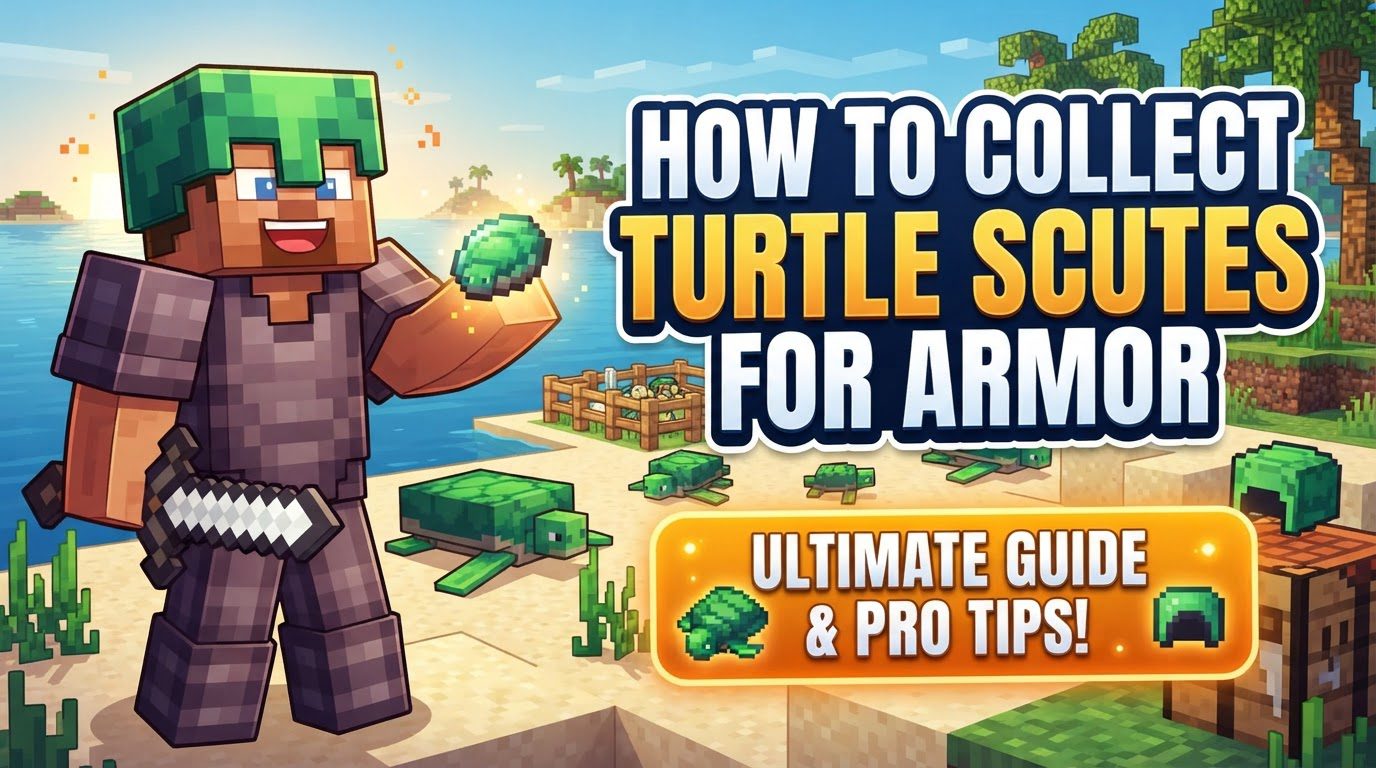
The Turtle Shell is more than just a helmet; it’s a strategic item for any adventurer looking to spend significant time underwater. It provides a respectable +2 armor points, comparable to an iron helmet. However, its true value lies in its special abilities: granting 10 seconds of underwater breathing and significantly improving underwater vision. This makes it indispensable for activities like ocean monument raids, treasure hunting, or building underwater bases.
The entire process of obtaining scutes revolves around the life cycle of turtles. Scutes are not dropped by adult turtles directly, nor can they be harvested from eggs. Instead, they are obtained exclusively when a baby turtle matures into an adult. This means that to get scutes, you must facilitate the breeding, hatching, and growth of baby turtles.
The Journey to Scute Collection: Step-by-Step
To begin your scute collection, you’ll need to follow a precise series of steps, starting with finding adult turtles and culminating in the collection of scutes from their offspring.
- 1. Locate Adult Turtles: Your first task is to find at least two adult turtles. These creatures are typically found on sandy beaches in the Overworld. It’s important to note that they prefer temperate or warm beaches, so you should avoid snowy or stony beach biomes where they are less likely to spawn. Finding at least two is crucial for breeding.
- 2. Gather Seagrass: Once you’ve located your turtles, you’ll need their favorite food: seagrass. Seagrass grows abundantly underwater in most ocean biomes. To collect it, you must use shears. Simply equip your shears and “mine” the seagrass blocks underwater. You’ll need a good supply, as seagrass is used for both breeding adult turtles and accelerating the growth of baby turtles.
- 3. Breed Turtles: With seagrass in hand, approach two adult turtles and feed each of them a piece of seagrass by right-clicking on them. This will cause them to enter “love mode,” indicated by hearts appearing above their heads. They will then approach each other and breed, resulting in one of the turtles becoming pregnant.
- 4. Egg Laying: After breeding, one of the turtles will become pregnant. This pregnant turtle will then embark on a journey back to its “home beach.” This is the specific sandy or red sand block where it originally spawned. You must follow the pregnant turtle to ensure you know where it lays its eggs. Once it reaches its home beach, it will dig into a sand or red sand block and lay 1-4 turtle eggs. These eggs are fragile and need careful handling.
- 5. Protect Eggs: The newly laid turtle eggs are incredibly vulnerable. Hostile mobs, particularly zombies, will actively seek out and trample turtle eggs, destroying them in the process. To prevent this, it is absolutely essential to enclose the eggs with protective blocks like fences, walls, or even solid blocks. Additionally, lighting up the area around the eggs with torches or glowstone will help deter other hostile mobs from spawning nearby and posing a threat. This protective barrier is critical for the survival of your future scute producers.
- 6. Hatch Eggs: With the eggs safely protected, you now enter a waiting period. Turtle eggs will hatch only on sand or red sand blocks. They typically take between 4 to 7 in-game nights to hatch. A crucial mechanic for egg progression is that they hatch faster at night. Furthermore, the player must remain within 128 blocks of the eggs for them to progress towards hatching. If you move too far away, their hatching timer will pause.
- 7. Grow Baby Turtles: Once the eggs successfully hatch, tiny baby turtles will emerge. These babies are very small and can easily get lost or fall into cracks, so ensure their enclosure is secure. Baby turtles take approximately one full in-game day (20 minutes of real-world time) to mature into adults naturally. However, you can significantly speed up this process by feeding them seagrass. Each piece of seagrass fed to a baby turtle reduces its remaining growth time by 10%. This allows for much faster scute production.
- 8. Collect Scutes: The moment a baby turtle finally matures into an adult, it will drop one scute. This scute will appear as an item on the ground. Simply walk over the scute to pick it up and add it to your inventory. Remember that five scutes are required to craft a single Turtle Shell helmet. Repeat this entire process until you have enough scutes for your needs.
Important Tips for Efficient Scute Farming
To optimize your scute collection efforts and avoid common pitfalls, consider these advanced strategies and important tips:
- Silk Touch Enchantment: One of the most valuable tools for scute farming is a pickaxe or shovel enchanted with Silk Touch. This enchantment allows you to pick up turtle eggs as an item without breaking them. This is incredibly useful because it enables you to move the eggs from their initial, potentially dangerous or inconvenient home beach location to a safer, more controlled hatching area of your choosing. This centralizes your farming efforts and simplifies protection.
- Automated Farms: For players looking to collect a large quantity of scutes, building an automated farm is highly recommended. These farms typically involve a centralized hatching area where scutes are dropped. A collection system, such as hoppers placed directly under the sand blocks where the scutes drop, can automatically gather them. This prevents scutes from despawning, which can happen after 5 minutes if they are not picked up, and significantly increases efficiency, especially when managing multiple baby turtles.
- AFK Spot: To ensure continuous progress in your turtle farm, especially for egg hatching and baby turtle growth, establishing an AFK (Away From Keyboard) spot is crucial. As mentioned, eggs will not progress if the player is more than 128 blocks away. An AFK spot, ideally located near the center of your farm, ensures that game ticks continue to process, allowing eggs to hatch and baby turtles to grow, even when you’re not actively playing.
- Maximize Output: To get scutes as quickly as possible, focus on maximizing every stage of the process. Breed as many turtles as you can find and sustain. Ensure your egg protection is foolproof. Continuously feed baby turtles seagrass to speed up their growth. The more turtles you have in the breeding and growth cycle, the higher your scute production rate will be. Creating a safe, well-lit, and enclosed environment for all stages is key to consistent output.
Common Mistakes to Avoid
Even experienced players can make mistakes when dealing with turtles. Be mindful of these common errors to ensure a smooth and successful scute farm:
- Trampling Eggs: Turtle eggs are extremely fragile. Walking or jumping on them will instantly break them, destroying all the potential scutes within. Always be careful around egg-laying sites and any areas where you have relocated eggs.
- Hostile Mobs: Failing to adequately protect your turtle eggs from hostile mobs, particularly zombies, is a common and costly mistake. Zombies are programmed to actively seek out and destroy turtle eggs. Ensure your egg enclosure is robust and well-lit to prevent any mob interference.
- Incorrect Surface: Turtle eggs will only hatch if they are placed on sand or red sand blocks. Attempting to place them on dirt, stone, or any other block type will prevent them from progressing and hatching. Always verify the block type before placing eggs, especially if you’re using Silk Touch to relocate them.
- Player Distance: As previously noted, turtle eggs will not progress towards hatching if the player is more than 128 blocks away. If you build a farm, make sure you have an AFK spot within this range, or plan to spend time in the area to allow the hatching process to continue.
- Despawning Scutes: Once a baby turtle matures and drops a scute, that item will despawn after 5 minutes if it is not collected. This is why a collection system (like hoppers) or consistent player presence is crucial for efficient farming. Losing scutes to despawning wastes all your effort.
- Luring for Eggs: You cannot lure a pregnant turtle to a different beach to lay its eggs. A pregnant turtle will always return to its “home beach” – the specific sand block where it originally spawned. This means you must follow the turtle to its chosen spot, or use Silk Touch to move the eggs after they are laid.
By following this comprehensive guide, understanding the unique mechanics of turtle breeding, and avoiding common pitfalls, you will be well-equipped to establish an efficient scute farm. Soon, you’ll be swimming with ease, breathing underwater, and exploring the depths of Minecraft with your brand new Turtle Shell helmet.
Tags:
YOU MAY ALSO LIKE...