Locating a Shipwreck for Loot, Explained
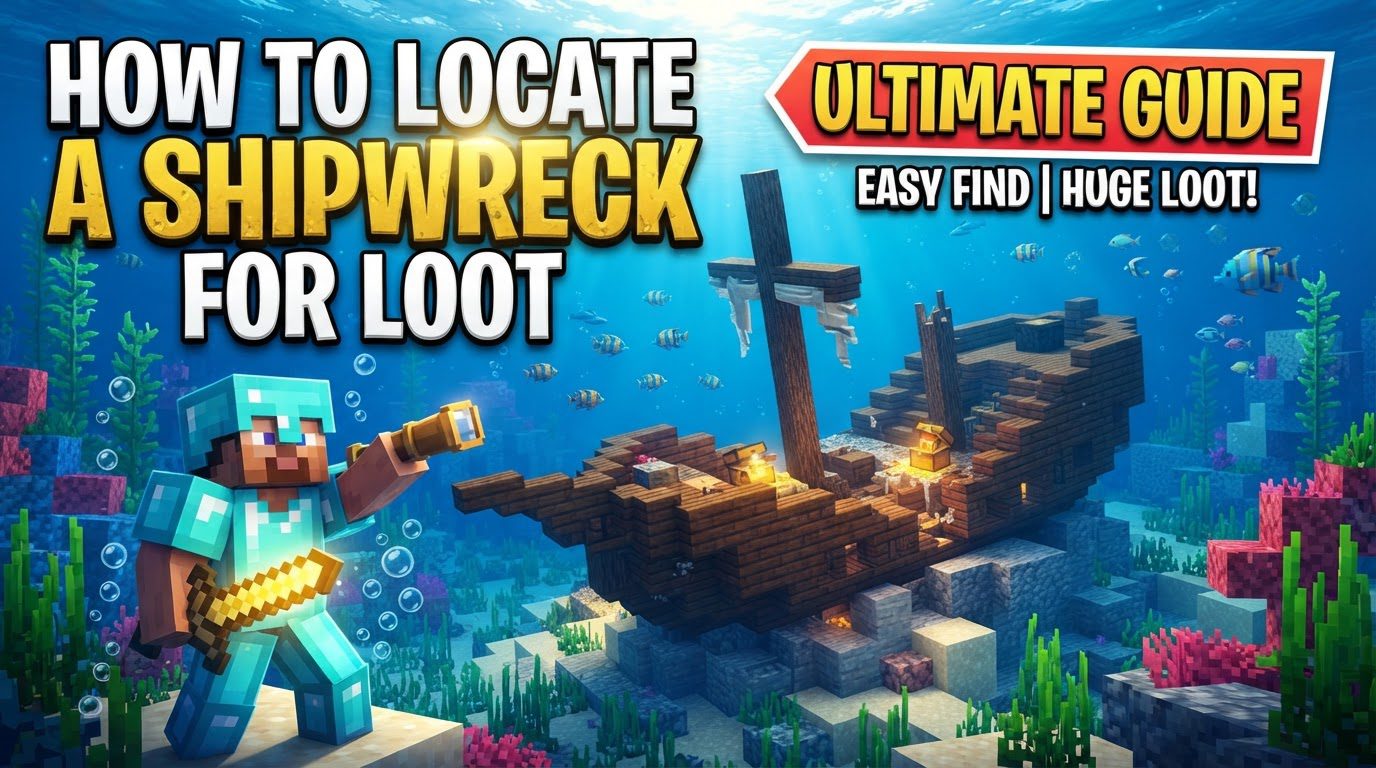
Minecraft’s vast oceans hold many secrets and treasures, none more iconic and rewarding than the enigmatic shipwreck. These submerged or beached structures offer a bounty of resources, from basic survival items to rare artifacts like the Heart of the Sea. Understanding how to efficiently locate and plunder these maritime relics is a crucial skill for any seasoned explorer.
Understanding Shipwreck Mechanics
Shipwrecks are naturally generated structures that can be found across all ocean biomes, including warm, cold, frozen, and deep oceans. They also frequently appear on beaches, sometimes partially submerged or even fully beached on land. This wide distribution makes them a relatively common find for those who know where to look. Shipwrecks can vary significantly in their appearance; some might be almost entirely intact, while others could be partially destroyed, overturned, or deeply embedded in the seabed, adding a layer of challenge to their discovery and exploration.
Each shipwreck is a potential treasure trove, capable of containing up to three distinct types of chests, each with its own unique set of loot:
- Supply Chests: Typically found in the bow, or front section, of the shipwreck. These chests are invaluable for early-game survival and exploration. They frequently contain essential items such as food (bread, potatoes), wood planks, coal, and paper. Occasionally, players might also find more specialized items like enchanted leather armor, which offers basic protection with added enchantments, gunpowder, or even TNT, providing explosive utility.
- Map Chests: These are usually located in the stern, or back section, often within what would be the captain’s quarters. Map Chests are critical for progressing to even greater treasures. They commonly hold maps, compasses, and additional paper. Most importantly, a Map Chest is the primary source for a Buried Treasure Map, an item that points directly to a hidden chest containing highly valuable loot.
- Treasure Chests: Also found in the stern, often in the lower hull or within the captain’s quarters, these chests contain the most valuable items directly within the shipwreck itself. Loot here can include precious resources like iron ingots, gold ingots, and emeralds. Lapis lazuli, useful for enchanting, is also a common find. Rarely, players might even discover diamonds or Bottles o’ Enchanting, which provide experience points.
The Buried Treasure Maps acquired from Map Chests are perhaps the most significant discovery within a shipwreck. These maps lead to a hidden chest buried beneath the sand or gravel of a beach, which always contains exceptionally valuable items. The ultimate prize from a Buried Treasure chest is the Heart of the Sea. This rare item is absolutely crucial for crafting a Conduit, a powerful underwater beacon that grants unlimited underwater breathing, night vision, and increased mining speed within its radius, transforming underwater exploration.
Beyond direct visual searching, Minecraft offers several mechanics to aid in locating these underwater wonders:
- Dolphin Guidance: Dolphins are friendly creatures of the ocean that can be incredibly helpful. By feeding a dolphin raw cod or raw salmon, it will lead the player to the nearest point of interest, which could be a shipwreck, a set of ocean ruins, or even a buried treasure chest. This is an excellent method for players who prefer an organic, in-game approach to exploration.
- Cartographer Villagers: For those who prefer a more structured approach, Cartographer villagers offer a trade for an Ocean Explorer Map. This special map highlights the location of various ocean structures, including shipwrecks, providing a clear objective for exploration.
- Coordinate Formula: Advanced players can leverage a predictable generation pattern in both Java and Bedrock Editions. Shipwrecks can generate using a specific coordinate formula: multiples of 384 + 160 for both the X and Z coordinates. For example, locations like (160, Z, 160), (544, Z, 160), or (160, Z, -224) are potential shipwreck hotspots, allowing for systematic searching.
Step-by-Step Process for Locating Shipwrecks
Embarking on a shipwreck hunt requires preparation and a methodical approach. Follow these steps to maximize your chances of success:
- Locate an Ocean Biome: Your first step is to find any type of ocean. This can be achieved by sailing across rivers or lakes, or by simply exploring the surface world until the landscape transitions into a vast body of water. Shipwrecks do not generate in rivers or small lakes, so a true ocean biome is essential.
- Prepare for Underwater Exploration: Shipwrecks are primarily underwater, making proper preparation vital.
- Boat: Craft a boat for efficient surface travel across the ocean.
- Potions: Consider brewing Night Vision potions. These dramatically improve underwater visibility, turning murky depths into clear viewing areas. Water Breathing potions are equally important, allowing you to remain submerged for extended periods without the risk of drowning, giving you ample time to search and loot.
- Search for Shipwrecks: Once in an ocean biome and prepared, employ one of several effective search methods:
- Visual Search: This is the most straightforward method. Sail across the ocean surface, keeping a keen eye out for any anomalies. Look for wooden structures on the seabed below, partially exposed masts breaking the surface, or even entire sections of ships beached on shorelines. A distinct brownish hue against the blue or green of the ocean floor can often indicate the presence of a shipwreck.
- Dolphin Guidance: Carry raw cod or raw salmon. When you encounter a dolphin, feed it one of these raw fish. The dolphin will then swim off in a specific direction, leading you directly to the nearest point of interest, which has a high chance of being a shipwreck. Follow it closely!
- Cartographer Maps: If you have access to a village, trade with a Cartographer villager. They can sell you an Ocean Explorer Map, which will graphically display the location of nearby ocean structures, including shipwrecks, making the search much more targeted.
- Commands (if cheats enabled): For players in worlds with cheats enabled, the command
/locate structure shipwreckwill instantly provide the coordinates of the nearest shipwreck, allowing for immediate travel to its location. - Coordinate Formula (Java/Bedrock): For a more technical and reliable approach in Java and Bedrock Editions, navigate to specific X and Z coordinates. Shipwrecks often generate at coordinates that are multiples of 384 + 160. Examples include X=160, 544, 928, etc., and Z=160, 544, 928, etc. By systematically checking these grid points, you can reliably find shipwrecks.
- Loot the Shipwreck: Once a shipwreck is found, carefully enter and begin your search for chests. Remember the general layout:
- Bow (Front): Look for Supply Chests here, containing food, wood, and basic resources.
- Stern (Back) / Captain’s Quarters: This area is crucial. You’ll likely find Map Chests here, which are your best bet for a Buried Treasure Map.
- Stern (Back) / Lower Hull: Often in conjunction with the captain’s quarters, the lower hull of the stern can hide Treasure Chests with valuable ingots, gems, and rare items.
Thoroughly search every accessible part of the shipwreck, as chests can sometimes be obscured or in unexpected corners due to the ship’s damaged state.
Important Tips for Shipwreck Exploration
- Potions are Key: Reiterate the importance of Night Vision and Water Breathing potions. Night Vision transforms the dark ocean floor into a clearly visible landscape, while Water Breathing allows you to focus on looting without the constant worry of oxygen. Consider bringing several of each for extended expeditions.
- Bring a Sword: Drowned mobs are hostile aquatic zombies that frequently spawn around shipwrecks. They pose a significant threat, especially underwater where movement is restricted. A sword is essential for defending yourself and clearing the area to safely loot.
- Collect Buried Treasure Maps: Always prioritize collecting Buried Treasure Maps from Map Chests. These maps are often the most valuable find in a shipwreck, as they lead to the Heart of the Sea, an item vital for advanced underwater exploration.
- Know Chest Locations: Familiarize yourself with the typical placement of chests: Supply in the bow, Map and Treasure in the stern. This knowledge will help you efficiently target the most valuable loot without wasting time.
- Conduit Power: If you’ve already found a Heart of the Sea and crafted a Conduit, activate it near your exploration site. A Conduit grants unlimited underwater breathing, night vision, and faster mining, making shipwreck looting incredibly easy and safe.
- Use Doors or Torches for Air Pockets: In situations where you lack Water Breathing potions, or in older game versions, placing a door or a torch against a solid block underwater can create a temporary air pocket. Standing in this pocket will replenish your oxygen, allowing you to extend your dive time.
Common Mistakes to Avoid
Even experienced players can fall victim to common errors when exploring shipwrecks. Being aware of these pitfalls can save you time, resources, and even your life:
- Drowning: This is arguably the most common and preventable mistake. Entering a shipwreck without sufficient preparation for underwater breathing (either through potions, a Conduit, or careful use of air pockets) is a recipe for disaster. Always monitor your oxygen bar.
- Ignoring Drowned: Underestimating the threat posed by Drowned mobs can be fatal. They can deal significant damage, especially if you are surrounded or caught off guard while low on oxygen. Always be prepared to fight or flee.
- Missing Chests: Shipwrecks can be broken and fragmented, leading to chests being obscured by debris or located in less obvious sections. Not thoroughly searching every accessible part of the shipwreck means you could be leaving valuable loot behind. Take your time and check all corners, especially in the stern.
- Not Following Up on Treasure Maps: Finding a Buried Treasure Map is only half the journey. Many players might collect the map but neglect to follow its instructions to find the buried treasure. This means missing out on the Heart of the Sea and other valuable items, which are often far more rewarding than the shipwreck itself.
By understanding the mechanics, preparing adequately, and employing smart search strategies, you can transform the daunting task of ocean exploration into a rewarding treasure hunt. Shipwrecks are not just broken vessels; they are gateways to invaluable resources and crucial items that can significantly enhance your Minecraft adventure.
Tags:
YOU MAY ALSO LIKE...