Reducing Fall Damage Using a Water Bucket — A Quick Guide
Mastering the Water Bucket Save: Your Guide to Negating Fall Damage in Minecraft
In the vast and often perilous world of Minecraft, falling from great heights is a common and usually fatal hazard. Whether you’re exploring deep caves, constructing towering megabases, or simply misjudging a jump, the threat of fall damage looms large. Fortunately, a simple water bucket, when used with precision and skill, can transform a deadly plunge into a graceful, damage-free landing. This comprehensive guide will walk you through the essential mechanics, step-by-step execution, vital tips, and common pitfalls to avoid, ensuring you master the art of the “water bucket save” and navigate Minecraft’s vertical challenges with confidence.
Understanding the Core Principle: How Water Negates Fall Damage
The ability of a water bucket to save you from certain death is rooted in a fundamental game mechanic. By understanding these principles, you can better anticipate and execute your saves.
- Complete Fall Damage Negation: Water possesses a unique property in Minecraft: it completely negates fall damage. This means that no matter the height from which you fall, if you successfully land in a water source block, you will take absolutely no damage. This makes it an incredibly powerful tool for survival, especially in situations where other methods of fall damage reduction (like feather falling enchantments) might still leave you with some residual damage.
- The Game’s Fall Damage Check: Minecraft’s engine only calculates and applies fall damage when your character’s feet make contact with a solid block or a liquid surface. This is a critical detail because it means that the game isn’t constantly checking your fall distance; it only cares about the moment of impact. Your goal is to ensure that this moment of impact is with water.
- Landing in Water: The Key to Safety: When your character lands in a water source block, the game registers this as a soft landing. Consequently, the fall damage calculation is bypassed entirely, and you emerge from the fall unscathed. The presence of water at the point of impact is the singular condition for avoiding damage.
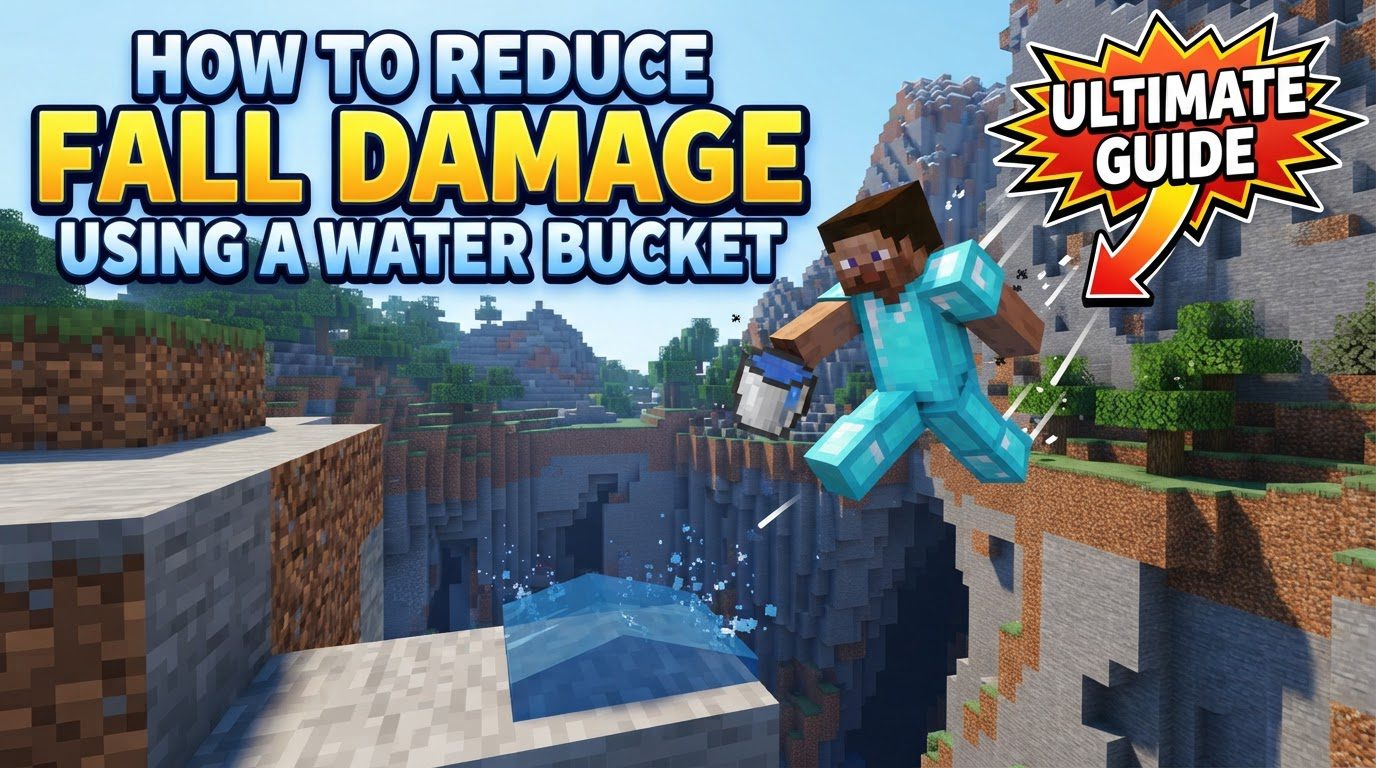
- Precision Placement: Creating Your Liquid Landing Pad: For the water save to work, the water must be placed at the exact y-level where your feet are about to make contact. This means you are essentially creating a temporary liquid landing pad directly beneath you, just moments before what would otherwise be a fatal impact. The timing and aiming must align to generate this protective layer of water precisely at the right moment and location.
Mastering the “Water Bucket Save”: A Step-by-Step Guide
Executing a perfect water bucket save requires quick reflexes, precise aiming, and impeccable timing. Follow these steps to successfully turn a plummet into a splash.
- Prepare Your Water Bucket: Before you even consider a high fall, ensure your water bucket is readily available. Place it in a hotbar slot that you can access instantly, ideally one that corresponds to a muscle-memory keybind. The split-second it takes to switch to the bucket can mean the difference between life and death.
- Select While Falling: As soon as you begin to fall, or as soon as you realize a fall is imminent, immediately switch to your water bucket in your hotbar. This action needs to be almost instantaneous, as you’ll have very little time to react once the ground rushes up to meet you.
- Aim Your Crosshair: Your crosshair placement is vital. You need to aim directly at the block that is beneath your feet, or simply straight down. For most situations, especially when falling directly downwards, looking straight down is the most reliable method, as it ensures the water will be placed directly below your character.
- The Precise Moment of Placement: This is the most challenging and crucial step. You must right-click (or use your game’s equivalent “place block” action button) at the exact moment your feet are approximately 1 to 2 blocks above the ground or the surface you are about to hit. This tiny window of opportunity is where practice truly pays off. Placing the water too early or too late will lead to failure.
- Successful Landing: If your timing and aim are correct, a water block will instantly appear directly beneath you. You will then land in this water, hear the familiar splash sound, and take absolutely no fall damage. You can then pick up the water with your bucket again, ready for your next adventure or unexpected descent.
Essential Tips for Success and Practice
The water bucket save is a skill that improves dramatically with practice. Incorporate these tips into your training to become a true master of aerial survival.
- Practice is Paramount: There is no substitute for practice. Start by intentionally falling from relatively short heights, gradually increasing the drop distance as your confidence and timing improve. This methodical approach will build your muscle memory and spatial awareness for accurate placement. Don’t be afraid to fail during practice; it’s how you learn.
- Consistent Hotbar Slot: Dedicate a specific hotbar slot to your water bucket and always keep it there. This consistency will allow you to instinctively switch to it without looking, saving precious milliseconds in high-pressure situations. Muscle memory is your best friend when speed is critical.
- Look Straight Down (for Beginners): While advanced players might aim at specific blocks in complex scenarios, beginners should prioritize looking straight down. This simplifies the aiming process immensely, ensuring the water is placed directly beneath your character’s center, maximizing your chances of landing in it.
- Utilize a Safety Net During Practice: To avoid repeatedly dying while learning, build a tall practice pillar and place a pre-existing water source at its base. This acts as a safety net, allowing you to practice the timing without the risk of immediate death if you miss your placement. You can then try placing your own water bucket just above this safety water.
- F3 Debug Screen (Java Edition): For Java Edition players, the F3 debug screen can be an invaluable learning tool. By observing your Y-coordinate, you can gain a better understanding of distances and how quickly you descend. This can help you refine your timing, allowing you to mentally calculate when that crucial 1-2 block placement window appears.
Common Pitfalls to Avoid
While the water bucket save is incredibly effective, it’s also prone to specific errors. Being aware of these common mistakes can help you avoid them and improve your success rate.
- Placing Too Late: This is arguably the most common mistake. If you right-click too late, you will hit the solid ground before the water block has a chance to render and register. The result will be full fall damage, often leading to death. The key is to anticipate the impact and place the water just before it.
- Placing Too Early: Conversely, placing the water too early means the water block will appear above you as you continue to fall. You will then pass through the water, and still take full fall damage upon impacting the ground below it. This often happens when players panic and click too soon, failing to create the landing pad at the correct Y-level.
- Not Looking Straight Down: If your crosshair isn’t aimed directly beneath you, the water may appear in front, behind, or to the side of your character. This will cause you to miss your intended liquid landing pad and still hit the solid ground, resulting in fall damage. Precision in aiming is just as important as timing.
- Switching Buckets Too Slowly: The time it takes to select the water bucket in your hotbar is part of the overall timing challenge. If you fumble with your hotbar or take too long to switch, the bucket won’t be in your hand in time to place the water, leaving you defenseless.
- Panicking Under Pressure: High-stress situations, such as an unexpected fall from a great height, can lead to panic. This emotional response often results in rushed decisions, mistiming, or incorrect placement of the water. Staying calm and relying on practiced muscle memory is key to success in critical moments.
- Spam Clicking (for Precise Timing Method): While some beginners might try to spam the right-click button hoping to hit the window, this method lacks control. It can sometimes work by chance, but it also carries the risk of picking the water back up immediately after placing it, leaving you exposed to fall damage. Focus on a single, deliberate click at the precise moment rather than a rapid succession of clicks.
With dedication to practice and a keen understanding of these mechanics and pitfalls, the water bucket will become your most trusted companion against the perils of gravity in Minecraft. Master this essential survival skill, and you’ll be able to conquer any height with confidence.
Tags:
YOU MAY ALSO LIKE...