

Minecraft Farm 2025
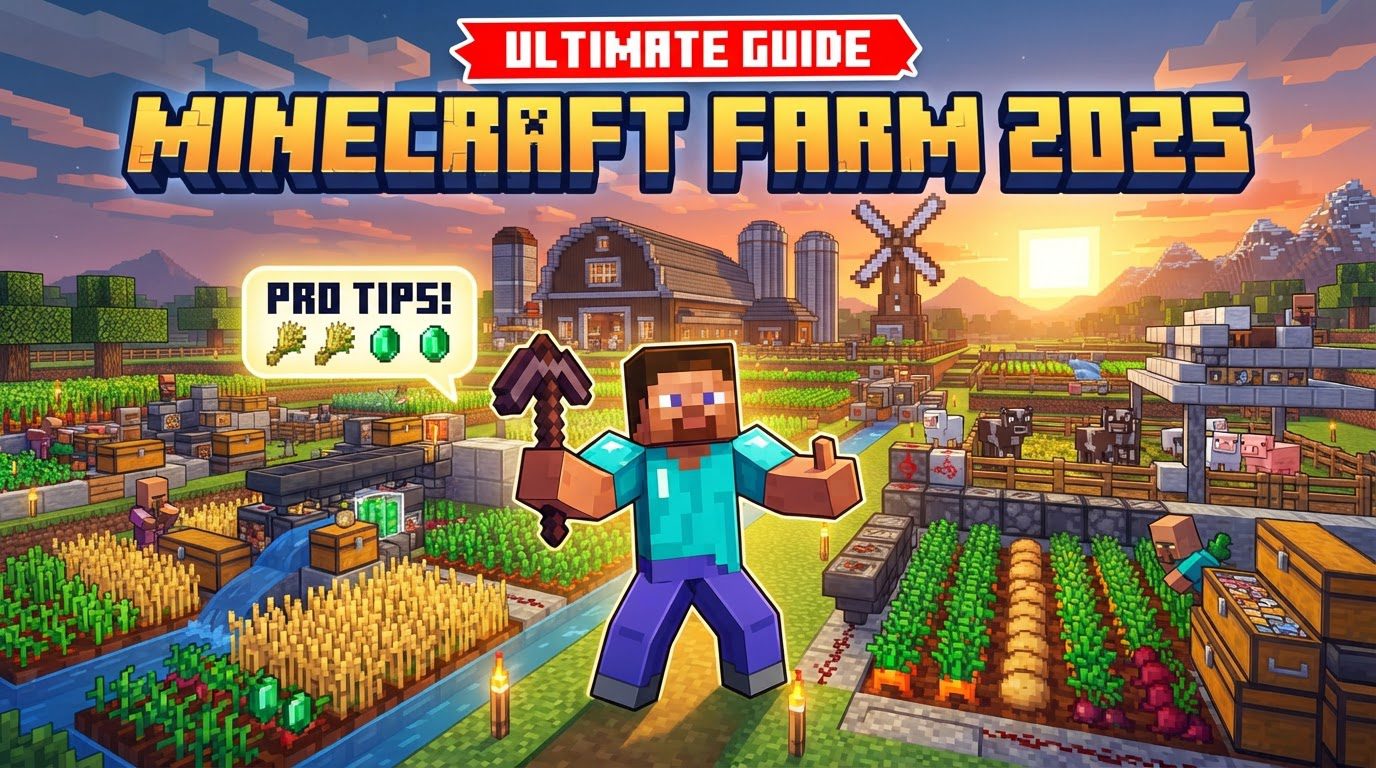
Building a complex Minecraft farm without a clear plan often leads to wasted materials, frustration, and ultimately, an inefficient setup. In the ever-evolving world of Minecraft, where player ingenuity constantly pushes the boundaries of automation, understanding the fundamental principles behind efficient resource generation is paramount. As we look towards “Minecraft Farm 2025,” these core mechanics and design philosophies remain the bedrock of successful farming, allowing players to transform raw resources into a sustainable, automated empire.
The Core Pillars of Minecraft Automation
At its heart, efficient farming in Minecraft, whether for food, experience, or rare mob drops, revolves around mastery of several key game mechanics. These principles are timeless and will continue to define effective farm designs well into 2025 and beyond.
- Automation: The ultimate goal of any advanced farm is to minimize manual input. Automatic farms are ingeniously designed systems that leverage in-game mechanics to produce vast quantities of items, experience, or food without constant player intervention. This frees up players to pursue other adventures, knowing their resources are steadily accumulating.
- Redstone: Often considered the “engine” of automation, Redstone is indispensable for creating dynamic and responsive farms. By transmitting power, Redstone activates mechanisms such as pistons for pushing blocks, dispensers for deploying items or liquids, and observers for detecting block changes. A solid understanding of Redstone circuitry is critical for designing and troubleshooting complex automated systems.
- Growth and Spawning Mechanics: Every farm’s efficiency hinges on understanding how its target resources behave. For crop farms, this means knowing the optimal light levels, water access, and block types required for rapid growth. For mob farms, it involves deep knowledge of mob spawning conditions – light levels, mob caps, specific block requirements, and even biome influences for hostile or passive creatures. Ignoring these nuances will severely hamper a farm’s output.
- Item Collection: Once items are produced or harvested, an efficient collection system is essential. Hopper systems are the workhorse of item transport, capable of picking up items from above and funneling them into chests or other containers. For larger-scale collection, especially in mob farms, strategically placed water flows can move vast quantities of items to a central collection point, making retrieval effortless.
- Villager Interaction: Villagers are surprisingly versatile and integral to many highly efficient farms. They can be used for automated crop harvesting, where they pick up and replant crops, or for trading valuable items. Their unique behaviors, such as linking to beds and workstations, or being scared by zombies, can be exploited to trigger specific farm mechanisms, most notably in iron golem farms.
- Version Differences: A crucial consideration for any farm builder is the distinction between Minecraft Java and Bedrock editions. While many core mechanics are similar, complex farms, particularly those involving Redstone or mob spawning logic like iron farms, can have fundamentally different requirements and designs between the two versions. Always ensure your chosen farm design is appropriate for your specific edition.
From Concept to Crop: A Step-by-Step Construction Guide
Building an effective farm, from the simplest wheat patch to the most intricate mob grinder, follows a logical progression. Adhering to these steps ensures a smoother construction process and a higher chance of success.
- Identify Need: Before laying a single block, determine precisely what resources you require. Are you short on food, iron, experience points, or specific mob drops? Your answer will dictate the type of farm you need to build.
- Research Design: Once your need is clear, embark on thorough research. The Minecraft community has developed countless proven farm designs for virtually every resource. Search for designs specifically tailored to your Minecraft edition (Java or Bedrock) and consider your available in-game resources and technical expertise. Don’t be afraid to adapt or combine elements from different designs.
- Gather Materials: A well-researched design will come with a detailed materials list. Collect all necessary blocks, Redstone components (pistons, observers, repeaters, dust), water buckets, lava buckets, and any other specific items like beds or workstations. Running out of a critical component mid-build can be frustrating and time-consuming.
- Build Structure: Construct the physical layout of the farm with precision. Pay meticulous attention to block placement, spacing, and dimensions. Even a single misplaced block can render a complex Redstone circuit or mob spawning platform non-functional. Use temporary blocks for scaffolding and measuring as needed.
- Implement Mechanics: This is where the farm comes to life. Integrate the Redstone circuitry, establish water flows, create mob-spawning areas with appropriate lighting conditions, or set up villager interactions according to your chosen design. Ensure all components are correctly wired and oriented.
- Test and Refine: Never assume a farm will work perfectly on the first try. Operate the farm to ensure it functions as intended, troubleshooting any issues that arise. This might involve adjusting Redstone timings, modifying water flows, or tweaking mob-spawning conditions. Optimization is an ongoing process that can significantly boost efficiency.
Elevating Your Yields: Advanced Strategies and Best Practices
Beyond the basic construction, several strategic considerations can dramatically improve the output and reliability of your Minecraft farms.
- Start Small: Resist the urge to immediately build the largest, most complex farm you find. Begin with simpler farms, such as a basic automatic crop farm or a small animal breeder, to gain a solid understanding of the underlying mechanics before attempting more ambitious builds. This builds confidence and prevents costly mistakes.
- Plan Layout: Before placing any permanent blocks, meticulously plan your farm’s layout. Counting blocks, sketching designs, or even building a small-scale replica in a creative world can prevent errors and ensure proper spacing. A well-planned layout maximizes efficiency and minimizes the need for costly rebuilding.
- Light Up/Spawn-Proof: For any mob farm, particularly hostile mob farms, it is crucial to spawn-proof the surrounding areas. This means ensuring that caves, surface areas, and any other dark spots within a certain radius of your farm are either well-lit with torches or blocked off. This forces mobs to spawn exclusively within your farm’s designated spawning pads, maintaining optimal rates.
- Optimize for Mob Caps: Mob farms, especially those targeting hostile creatures, are heavily influenced by the game’s mob cap. To maximize the chances of mobs spawning within your farm, consider building it high in the sky, far away from any other potential spawning areas. Alternatively, ensure all surrounding areas on the ground are thoroughly spawn-proofed to prevent mobs from filling the cap elsewhere.
Navigating the Nuances: Common Pitfalls for Farm Builders
Even experienced players can fall victim to common mistakes that hinder farm performance. Being aware of these can save countless hours of troubleshooting.
- Poor Planning: As mentioned, rushing into a build without a clear blueprint is a recipe for disaster. It often leads to wasted materials, incorrect dimensions, and farms that simply don’t work as intended.
- Incorrect Biome/Placement: Certain farms, particularly those involving specific mob spawns or villager mechanics, can be sensitive to their placement. Building a farm in the wrong biome or at an unsuitable elevation can severely impact its functionality. For instance, slime farms require specific slime chunks, and iron golem farms rely on villagers being scared, which can be influenced by proximity to zombies.
- Ignoring Mechanics: A fundamental misunderstanding of core game mechanics – be it how Redstone signals propagate, how water flows, or the precise conditions for mob spawning or villager linking – is a frequent cause of farm failure. Always refer to reliable sources for mechanic specifics.
- Overcrowding/Overproduction: While the goal is abundant resources, trying to plant too many crops in a small area without proper hydration or light, or cramming too many animals into an enclosure, can lead to low yields and poor growth rates due to game mechanics limiting entity density or growth cycles.
- Mixing Java and Bedrock Mechanics: This is a critical mistake. Applying a farm design intended for Minecraft Java Edition directly to Bedrock Edition (or vice-versa) without significant modification will almost always result in failure. The underlying code for Redstone, mob AI, and physics can be fundamentally different between the two versions.
- Lack of Spawn Proofing: For any farm reliant on mob spawning, failing to adequately light up or block off areas outside the farm’s boundaries will drastically reduce its efficiency. Mobs will spawn in unlit caves or surfaces instead of your farm, filling the global mob cap and preventing new spawns where you want them.
Beyond the Current Harvest: Envisioning Future Farm Mechanics
While there are no confirmed updates for “Minecraft Farm 2025” with specific new mechanics, the community frequently discusses and suggests improvements to farming. These remain wishes rather than confirmed features, but they offer a glimpse into potential future enhancements.
Players often hope for a dedicated “Farming Update” that could introduce a range of new elements. This might include new crops with unique properties, specialized farming tools like scythes or pitchforks for more efficient manual harvesting, or more intricate irrigation systems that go beyond simple water blocks. Furthermore, enhanced cooking mechanics, allowing for more complex recipes or food preservation, are also popular suggestions. While these are speculative, the consistent desire for deeper agricultural gameplay suggests that farming will remain a central, evolving aspect of the Minecraft experience.
In conclusion, mastering Minecraft farming in 2025, as in any year, is about combining creativity with a deep understanding of the game’s intricate mechanics. By planning meticulously, researching effectively, and learning from both successes and failures, players can build automated systems that provide an endless bounty of resources, transforming their blocky world into a truly self-sustaining empire.
Tags:
YOU MAY ALSO LIKE...


