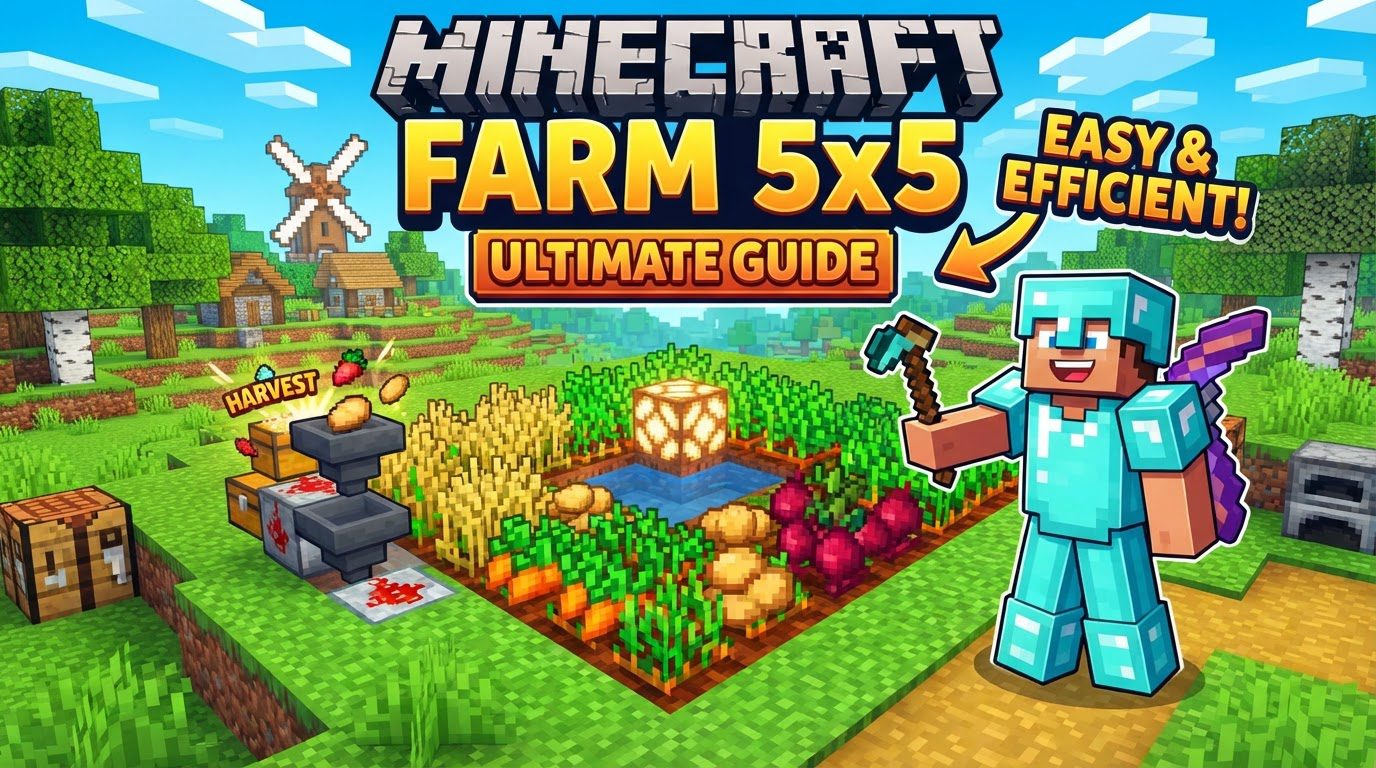
Minecraft Farm 5×5
A single water block possesses the remarkable ability to hydrate a 9×9 area of farmland in Minecraft. This little-known fact is the cornerstone of efficiency for compact farming, making the 5×5 farm design not just viable, but exceptionally practical for a variety of resources. Whether you’re a seasoned crafter or a budding builder, understanding the mechanics behind these compact constructs can dramatically improve your in-game productivity and resource management.
The Foundation: Crafting Your First 5×5 Crop Farm
The 5×5 crop farm stands as a testament to Minecraft’s elegant design, offering maximum yield for minimal space and resources. Its efficiency stems directly from the hydration radius of water, which covers a 9×9 square. A 5×5 plot fits perfectly within this hydrated zone, ensuring every block of farmland receives the necessary moisture for rapid growth. This design is ideal for early-game food production and can be scaled up or integrated into larger builds with ease.
Step-by-Step Construction for a Basic Crop Farm:
- Clear Your Space: Begin by identifying and clearing a 5×5 square area on the ground. This will be the footprint of your farm.
- Central Water Source: Dig a single block deep hole precisely in the center of your cleared 5×5 plot. This central position is crucial for optimal hydration.
- Introduce Water: Place a water bucket into this central hole. The water will settle into a single source block, radiating its hydrating effect outwards.
- Prepare the Farmland: Equip a hoe and use it on all 24 surrounding dirt blocks within the 5×5 square. This action converts them into fertile farmland, ready for planting.
- Plant Your Crops: Sow your desired seeds-be it wheat, carrots, potatoes, or beetroot-onto the newly prepared farmland.
- Ensure Illumination (Optional but Recommended): If your farm is indoors or if you want to guarantee continuous growth through the night, place torches or other light sources around the perimeter. Plants will not grow in insufficient light.
This simple, compact design provides a steady supply of essential crops, making it a staple in any survival world. Its small footprint allows for easy integration into existing bases or even within mobile structures.
Optimizing Your Harvest: Advanced Crop Farm Techniques
While the basic 5×5 crop farm is highly effective, a few considerations can further enhance its output and efficiency. Understanding these nuances can turn a good farm into a great one.
- Light Levels are Key: As mentioned, crops require adequate light to grow. If your farm is underground or in a dark area, strategically placed light sources like torches, glowstone, or sea lanterns are essential. Without sufficient light, crops will simply not progress through their growth stages, leading to stagnant production.
- Mind Your Placement: While tempting to place crops diagonally, be aware that diagonal placement can slightly slow their growth rate. For maximum efficiency, try to plant in straight rows where possible, though for a 5×5, the difference is often negligible compared to the overall convenience.
- Accelerated Growth with Bonemeal: For immediate results or to quickly jumpstart your farm, bonemeal is your best friend. Applying bonemeal directly to a planted crop will instantly advance its growth stage, sometimes to full maturity. This is particularly useful for rare crops or when you need a quick harvest.
- Specialized Crops: Remember that not all crops adhere to the same rules. For instance, Nether wart, a vital ingredient for brewing, exclusively grows on Soul Sand and is not affected by water or light in the same way traditional crops are. Always consider the specific needs of the item you wish to farm.
By keeping these points in mind, you can transform your basic 5×5 crop farm into a highly productive agricultural hub tailored to your specific needs.
The Nuances of Iron: 5×5 Iron Farm Designs
When the term “5×5 farm” extends beyond crops, it often refers to a specific component or a confined space within a more complex iron golem spawning mechanism. Iron farms are considerably more intricate than crop farms, and their mechanics vary significantly between Minecraft’s Java and Bedrock Editions. A 5×5 space might define the villager chamber or the golem spawning platform, but rarely the entire farm’s footprint.
Edition-Specific Iron Farm Requirements:
- Java Edition: For Java Edition players, a compact iron farm can be designed around a central 5×5 (or similar small) area. The core requirement involves at least three villagers who are “scared” by a zombie. These villagers must also have access to beds and workstations to register as a “village,” which is the trigger for iron golem spawning. The 5×5 might describe the area where the villagers are contained or where the golem is expected to spawn.
- Bedrock Edition: Bedrock Edition iron farms operate on a different principle, demanding a larger population. You’ll need a minimum of 20 villagers, each linked to their own workstation, and at least 20 beds within proximity. These conditions, when met, create the necessary environment for iron golems to spawn. The “5×5” in this context might refer to a small, enclosed spawning platform where golems appear before being directed to a collection system.
In both editions, once an iron golem spawns, an efficient killing and collection mechanism is vital. One effective method involves using lava: placing a transparent block like a cauldron filled with lava in the golem’s spawning area can efficiently eliminate them, allowing their iron ingots to drop into a collection hopper below.
Avoiding Common Pitfalls: Ensuring Farm Success
Building any farm in Minecraft, especially complex ones like iron farms, can be fraught with potential issues. Sidestepping these common mistakes will save you time, resources, and frustration.
- The Peril of Poor Planning: Rushing into construction without a clear design or understanding of the mechanics is a recipe for failure. Always plan your farm layout, material requirements, and operational logic beforehand.
- Ignoring Edition Differences: This is arguably the most critical mistake for complex farms. Attempting to build a Java Edition iron farm using Bedrock mechanics (or vice-versa) will inevitably result in a non-functional build. Always verify that the design you are following is specifically for your game edition.
- Incorrect Placement for Iron Farms: Location matters significantly for iron farms. Building an iron farm in an ocean or river biome can lead to the unintended spawning of drowned or other aquatic mobs instead of iron golems. Furthermore, failing to adequately spawn-proof the area around your iron farm (e.g., lighting up caves, placing non-spawnable blocks) can cause golems to spawn outside your collection system, rendering your farm inefficient or useless.
- Villager Connectivity Issues (Iron Farms): Villagers are the heart of an iron farm. They must be able to link to their designated beds and workstations. If villagers cannot pathfind to or ‘see’ their required blocks, they will not register as a valid village, and golems will not spawn. Ensure clear access and proper placement for all villager components.
- Unseen Threats: Caves Underneath (Iron Farms): A frequently overlooked problem is the presence of unlit caves or dark areas directly beneath your iron farm. Iron golems have a tendency to spawn in dark, open spaces. If such a cave exists, golems might spawn underground, out of reach of your collection system, effectively breaking your farm’s output. Always investigate and thoroughly light up or fill in any caves below your iron farm.
Strategic Integration and Protection
The compact nature of 5×5 farms offers significant advantages beyond simple efficiency. Their small footprint makes them incredibly versatile for various applications and environments.
- Space-Saving Design: In survival worlds where every block counts, or when building within a confined base, the compact nature of 5×5 farms is invaluable. They allow for high-density resource generation without consuming vast tracts of land.
- Fortified Integration: You can seamlessly integrate a 5×5 farm into a larger, fortified structure. This provides excellent protection for your crops and villagers from hostile mobs, ensuring your resources are safe even during the darkest nights or most dangerous expeditions. Consider enclosing your farm within walls, under a roof, and securing access points.
- Storage Solutions: When building within a fortified area, it’s easy to connect your farm to an automated collection system that feeds directly into chests or a larger storage network. This streamlines the harvesting process and keeps your valuable resources organized and accessible.
Ultimately, the “Minecraft Farm 5×5” concept, whether referring to a simple crop plot or a component of a more complex iron generator, embodies efficiency and thoughtful design. By understanding the core mechanics, following proven steps, and learning from common mistakes, you can master these compact builds and significantly enhance your Minecraft experience.
Tags:
YOU MAY ALSO LIKE...