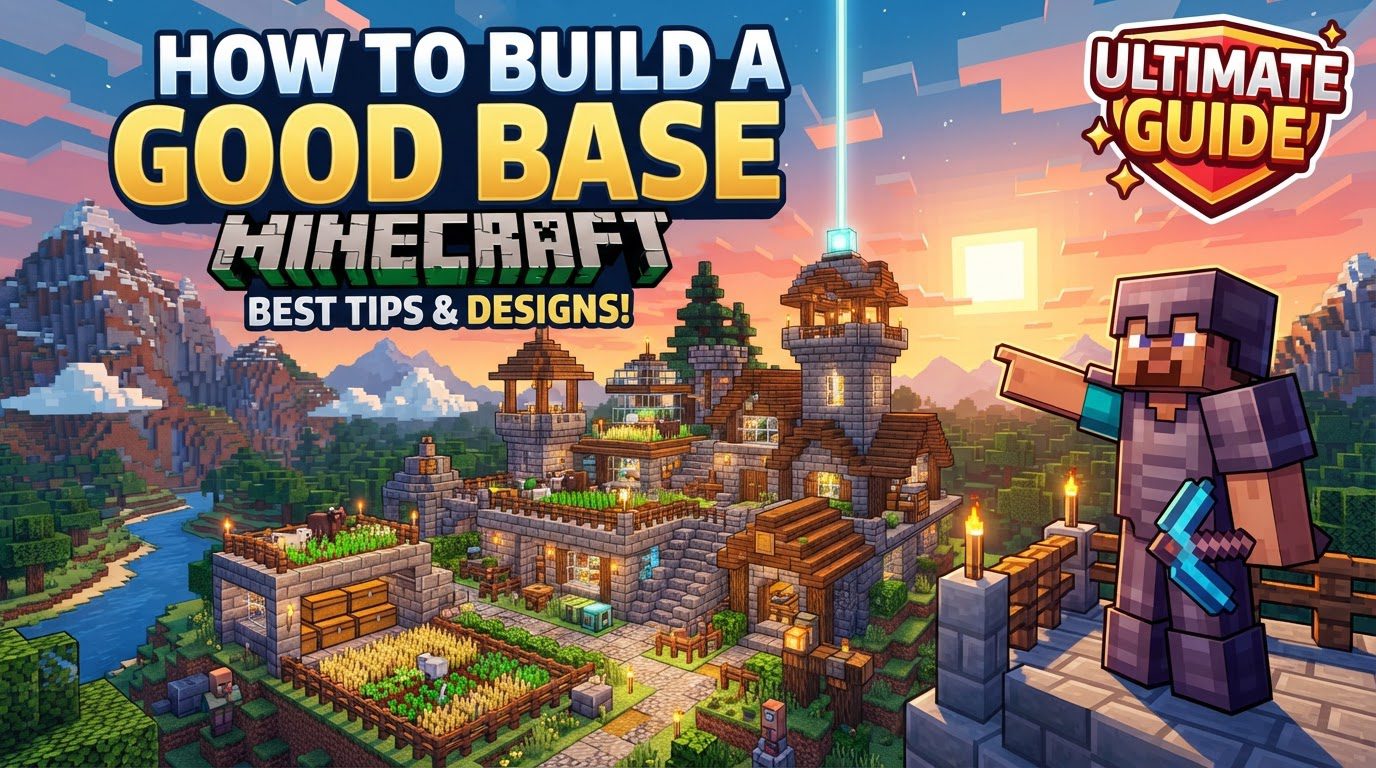
How to Build a Good Base Minecraft
Many new players make the critical error of rushing to build their first shelter directly under their spawn point, only to abandon it hours later as their needs evolve and the world expands around them. A truly good Minecraft base isn’t just a quick dirt hut; it’s a carefully considered, evolving ecosystem designed to support your adventures, protect your progress, and provide a sanctuary in a world full of dangers and endless possibilities.
The Foundation: Why a Good Base Matters
Your base is the heart of your Minecraft experience. It’s where you store your hard-earned resources, process materials, recover from perilous expeditions, and plan your next grand project. Without a solid, functional, and secure base, even the most seasoned adventurer can find themselves struggling with inventory management, constantly fending off hostile mobs, or losing valuable items to unfortunate accidents. A well-designed base streamlines gameplay, maximizes efficiency, and ultimately enhances your enjoyment of the game, transforming chaos into comfort and productivity.
Strategic Site Selection: More Than Just a Pretty View
The location of your base is paramount, influencing everything from resource gathering to future expansion. Don’t just settle for the first flat patch of land you see.
- Biome Advantages: Consider what biomes offer. A forest provides abundant wood; a taiga or snowy biome offers spruce and snow for building; a desert has sand and cacti; plains are flat and easy to build on. Proximity to multiple biomes can be incredibly beneficial for diverse resource collection. A base near a swamp might offer easy access to slimes, while an ocean allows for underwater farms.
- Resource Proximity: Look for areas rich in essential early-game resources like wood, stone, and iron. Being close to a cave system for mining, or a village for trading, can save immense amounts of time. Water sources are also crucial for farming and aesthetic features.
- Natural Defenses: Utilize the terrain to your advantage. Building into a mountain, on a high plateau, or even on an island can offer natural protection from wandering mobs and provide excellent vantage points. A chasm or ravine can serve as a natural perimeter.
Blueprint for Success: Defining Your Base’s Purpose
Before laying the first block, envision what your base will primarily be. This early planning prevents costly reworks and ensures your structure meets your long-term goals.
- Survival Hub: A practical, efficient space focused on immediate needs: crafting, storage, smelting, and a safe place to sleep. This is often the first iteration of any base.
- Industrial Complex: As you progress, your base might evolve into a hub for automated farms, mob grinders, and complex redstone machinery. This requires ample space, careful planning for redstone circuits, and efficient resource transport systems.
- Aesthetic Showcase: For players who enjoy creative building, the base itself can be a work of art. This involves intricate designs, diverse material palettes, and meticulous attention to detail, often prioritizing form over pure function, though a good aesthetic base still maintains core functionality.
- Hybrid Base: Most players will eventually build a base that combines elements of all three, balancing practicality with personal style and expansion capabilities.
The Essentials: Core Facilities Every Base Needs
Regardless of your base’s ultimate purpose or design, certain fundamental components are non-negotiable for efficient gameplay.
- Storage Solutions: This is arguably the most critical component. Implement a well-organized chest system early on. Consider alphabetical, categorical (e.g., blocks, tools, food), or color-coded systems. As your inventory grows, expand to double chests, barrels, and potentially automated storage systems using hoppers and droppers. Adequate storage prevents clutter and ensures you can always find what you need.
- Crafting & Utility Stations: A dedicated area for your crafting table, furnace array, blast furnace, smoker, anvil, grindstone, stonecutter, and later, an enchanting table and brewing stand. Grouping these together creates an efficient workspace. Ensure easy access to storage for crafting materials.
- Rest & Respawn Point: A bed is essential for skipping the night, setting your spawn point, and recovering health. Place it in a secure, mob-proof room.
- Mob-Proofing & Lighting: Hostile mobs spawn in areas with light levels of 0. Torches, glowstone, sea lanterns, and shroomlights are your best friends. Light up both the interior and a significant perimeter around your base to prevent unwanted visitors. Consider using fences, walls, or transparent blocks to prevent mobs from pathfinding directly into your base.
Fortifying Your Fortress: Defense and Security
Protecting your base from creepers, zombies, spiders, and other threats is crucial for preserving your structures and your sanity.
- Perimeter Walls and Barriers: A sturdy wall, at least two blocks high, is a good start. For more robust defense, consider a three-block-high wall to prevent spiders from climbing over, or an overhang. Moats, lava traps, or even simple trenches can add extra layers of protection.
- Strategic Lighting: Beyond just illuminating the interior, ensure the entire exterior perimeter is well-lit to prevent mob spawns. Place torches on top of walls, around pathways, and in any dark corners.
- Automated Defenses: As you advance, you can incorporate redstone-powered defenses like piston-activated walls, dispenser-based arrow traps, or even complex mob grinders that funnel enemies into a killing chamber.
- Entry and Exit Control: Designate clear, secure entry and exit points. Iron doors with pressure plates (on the inside only) or buttons, or even hidden entrances, can provide better security than simple wooden doors.
Beyond Function: Aesthetics and Personal Touch
A good base isn’t just functional; it should also be a place you enjoy spending time in. Aesthetics contribute significantly to the overall experience.
- Material Palettes: Experiment with different block types beyond just cobblestone and wood. Stone bricks, polished diorite, deepslate, terracotta, concrete, and various wood types can add texture and color. Combine materials that complement each other for visual interest.
- Architectural Styles: Whether you prefer medieval castles, modern skyscrapers, underground bunkers, or fantastical treehouses, choose a style and stick with it. Consistency in design creates a cohesive and appealing structure.
- Interior Design: Don’t neglect the inside! Add details like rugs (colored wool/carpets), paintings, item frames, flower pots, bookshelves, and custom furniture using stairs and slabs. Good lighting and thoughtful layouts make rooms feel more inviting.
- Landscaping and Exterior: Extend your design beyond the walls. Plant gardens, create pathways, build fountains, add custom trees, or sculpt the terrain around your base. A well-landscaped exterior enhances curb appeal and blends your base into the environment.
Growth and Automation: Preparing for the Future
Minecraft is an ever-evolving game, and your base should be able to evolve with your needs. Plan for expansion and automation.
- Farming and Resource Generation: Integrate automatic farms for food, crops, mob drops, and even tree farms. These provide a steady supply of resources with minimal effort, freeing you up for other projects.
- Redstone Contraptions: Learn basic redstone to automate doors, lights, piston systems, and more complex machinery. This can greatly improve the efficiency and convenience of your base.
- Expansion Planning: Design your base with future growth in mind. Leave space for new wings, underground levels, or external farm plots. Modular designs allow you to add new sections without disrupting the existing structure.
Living Structure: Maintenance and Evolution
Your base is not a static object; it’s a living structure that will change as you play. Regularly inspect for mob spawns, patch up creeper holes, and upgrade outdated systems. As you acquire new resources and learn new techniques, don’t be afraid to renovate, redecorate, or completely overhaul sections of your base. A truly good base is one that adapts to your playstyle, grows with your ambition, and remains a comfortable, efficient, and secure haven throughout your Minecraft journey.
Building a good base in Minecraft is an iterative process of planning, constructing, defending, and refining. By considering location, purpose, essential facilities, defense, aesthetics, and future expansion, you can create a base that not only survives but thrives, becoming a testament to your creativity and resilience in the blocky world.
Tags:
YOU MAY ALSO LIKE...