How to Build Bases Resistant to Creeper Destruction
Many new Minecraft players learn the hard way that a beautifully crafted wooden house can be reduced to splinters in mere seconds by an unexpected visitor: the Creeper. These silent, green adversaries are notorious for their destructive capabilities, especially to unprotected structures. Building a base that can withstand their explosive wrath requires a strategic approach, combining an understanding of their mechanics with robust defensive architecture and material choices.
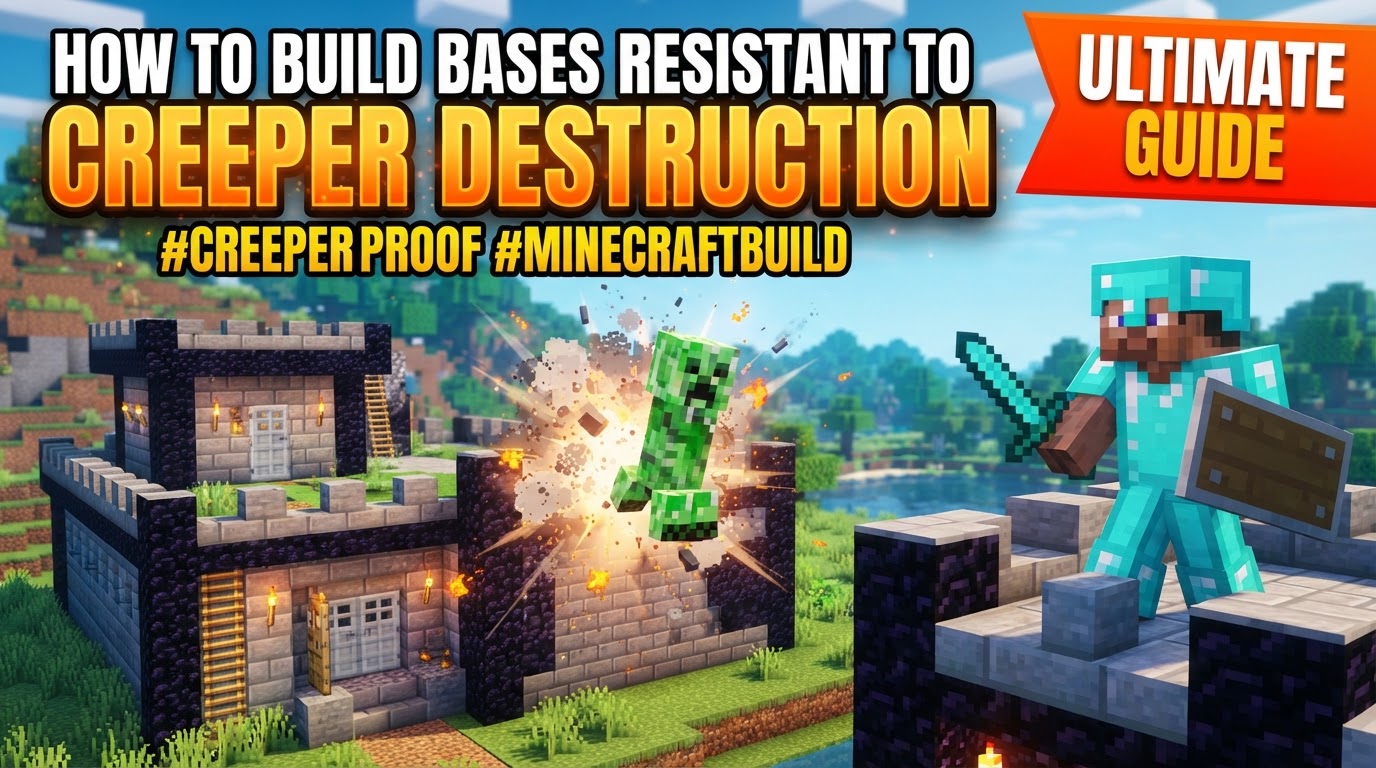
Understanding the Green Menace: Creeper Mechanics
To effectively defend against Creepers, one must first understand their behavior. Creepers are unique hostile mobs that do not burn in daylight. They typically spawn in areas with a light level of 7 or lower, meaning any dimly lit space, whether inside or outside your base, is a potential breeding ground. Once spawned, a Creeper will relentlessly pursue any player within a 16-block radius, and it can track players up to 4 blocks of vertical height difference.
The real danger begins when a Creeper gets close. If a player is within 3 blocks and maintains a direct line of sight, the Creeper will light its 1.5-second fuse, indicated by its characteristic hiss and flashing texture. If the player does not move, the Creeper will detonate, creating a spherical crater that is typically 4x4x4 blocks in size. Crucially, moving at least 7 blocks away or breaking the line of sight (e.g., by placing a block between yourself and the Creeper) will cancel its fuse, giving you a chance to escape or re-engage.
An even greater threat is the “charged Creeper.” This occurs when a Creeper is struck by lightning within 4 blocks, causing it to glow with a blue aura. A charged Creeper’s explosion power is significantly amplified, becoming up to four times more destructive than a regular Creeper. This can obliterate even moderately blast-resistant materials. A key defensive mechanic to remember is that explosions that occur underwater will not damage the surrounding landscape, though they still harm players and mobs within their radius.
Choosing Your Foundation: Blast-Resistant Materials
The first line of defense for any Creeper-resistant base is the material it’s constructed from. Using weak blocks is a common mistake that leaves your base vulnerable. Avoid easily destructible blocks like wood, dirt, sand, or gravel for any critical structures or external walls, as these will offer virtually no protection.
- Highly Resistant Blocks: For walls, floors, and critical infrastructure, prioritize blocks with high blast resistance.
- Obsidian: This is the undisputed champion of blast resistance, being nearly 100% explosion-proof against Creepers (only blue Wither skulls can significantly damage it). It’s challenging to obtain but invaluable for critical areas.
- Deepslate and its Variants: Deepslate, cobbled deepslate, deepslate bricks, and polished deepslate are excellent choices, offering high blast resistance comparable to stone. They are aesthetically pleasing and readily available once you mine deep enough.
- Cobblestone and Stone: These are early-game staples that provide good protection. They are abundant and easy to acquire, making them ideal for initial defenses and outer layers.
- Nether Brick and Stone Brick: Both of these offer strong blast resistance, making them viable options for both aesthetics and defense.
- Waterlogged Blocks: An often-overlooked but incredibly effective defense is waterlogging. Any block that is waterlogged (meaning water is inside it, like a waterlogged stair or slab) becomes 100% blast resistant. This can be strategically used for critical internal walls or hidden layers.
Perimeter Protection: Keeping Creepers at Bay
Preventing Creepers from ever reaching your base is far more effective than trying to repair the damage. A multi-layered perimeter defense is crucial.
- Illuminate the Surroundings: This is the most fundamental step. Creepers cannot spawn in areas with a light level above 7. Place torches, glowstone, sea lanterns, or other light sources approximately 5-7 blocks apart around your entire base perimeter, and inside any potentially dark areas. This denies them spawning points.
- Sturdy Walls: Constructing walls around your base is essential. These should be at least two blocks high to deter Creepers and other ground-based mobs. For added security, consider adding an overhang or “lip” to the top of your walls. This prevents spiders from climbing over and can sometimes trap Creepers in a ditch if they try to jump.
- Defensive Trenches or Moats: Digging a trench around your base creates a physical barrier. A trench at least 2 blocks deep will block most mobs. However, to ensure that a Creeper explosion in the trench doesn’t damage your base walls, a 4-block deep trench is highly recommended. You can also fill these trenches with water or lava for extra deterrents.
- Cactus Fences: For an active defense, a border of cacti can be effective. Plant cacti in a checkerboard pattern on sand blocks. Mobs that walk into the cacti will take damage, potentially killing Creepers before they reach your main defenses.
- Elevated Bases: Building your entire base on pillars or on top of a natural hill makes it significantly harder for Creepers to reach. If the base’s lowest point is more than 4 blocks above the ground, Creepers on the ground won’t be able to detect or pursue you from below, effectively making the base unreachable for them.
Advanced Defensive Layers and Strategic Placement
Beyond basic perimeters, several clever techniques can enhance your base’s resilience.
- Comprehensive Water Defenses: As mentioned, underwater explosions cause no block damage. You can leverage this by building an entire base underwater, or by strategically covering critical external walls or vulnerable areas with flowing water. This provides a constant, passive defense against explosions.
- Mob-Proofing Floors and Roofs: Mobs, including Creepers, cannot spawn on bottom-half slabs or stairs. By using these for the floors and roofs of your base, you eliminate potential internal spawn points, keeping your interior safe from unexpected visitors.
- Animal Allies: Cats and ocelots are more than just pets; they are effective Creeper repellents. Creepers will flee if a cat or ocelot is within a 6-block radius. Strategically placing these feline friends around your base’s perimeter or near vulnerable entrances can create “no-Creeper zones.”
Dealing with Direct Threats: Combat and Prevention
Even with the best defenses, a Creeper might occasionally slip through. Knowing how to handle them directly is crucial for minimizing damage.
- Hit and Retreat: When a Creeper starts its fuse, hit it with your weapon and immediately retreat backwards. This will often push the Creeper out of range, canceling its fuse. Repeat this process until it’s defeated.
- Shield Protection: A shield is an invaluable tool. If a Creeper detonates while you are blocking with a shield, you will take significantly reduced damage and any block damage to your base will be prevented in the direction of your shield.
- Ranged Combat: Using a bow and arrow allows you to eliminate Creepers from a safe distance, well outside their detonation radius.
- Manual Detonation: In a safe, open area away from your base, you can use flint and steel on a Creeper to manually light its fuse. This allows you to control where it explodes, preventing damage to your structures.
Common Pitfalls to Avoid
Many base destruction incidents stem from a few recurring mistakes:
- Insufficient Lighting: This cannot be stressed enough. Any dark patch is an invitation for Creepers. Ensure every corner, both inside and out, meets the light level requirements to prevent spawns.
- Using Weak Materials for Critical Structures: Relying on wood, dirt, or other easily destructible blocks for your main walls or storage areas is a recipe for disaster. Invest in blast-resistant materials.
- Lack of Perimeter Defenses: An open base, no matter how well-lit inside, is constantly at risk. Without walls, trenches, or other barriers, Creepers have direct access to your structures, making it only a matter of time before an explosion occurs.
By understanding Creeper mechanics, choosing the right materials, and implementing a multi-layered defense strategy, you can transform your Minecraft base into a fortress capable of shrugging off even the most determined explosive threats. Build smart, light up your world, and enjoy a Creeper-free existence.
Tags:
YOU MAY ALSO LIKE...