Finding a Dripstone Cave for Pointed Dripstone
Understanding Dripstone Caves and Pointed Dripstone
Dripstone Caves represent a distinct and captivating cave biome within the vast world of Minecraft’s Overworld. These unique subterranean environments were introduced as part of the momentous Caves & Cliffs update (v1.17), bringing new geological features and resources for players to discover. Characterized by their striking formations, Dripstone Caves are a primary source of both dripstone blocks and the highly sought-after pointed dripstone.
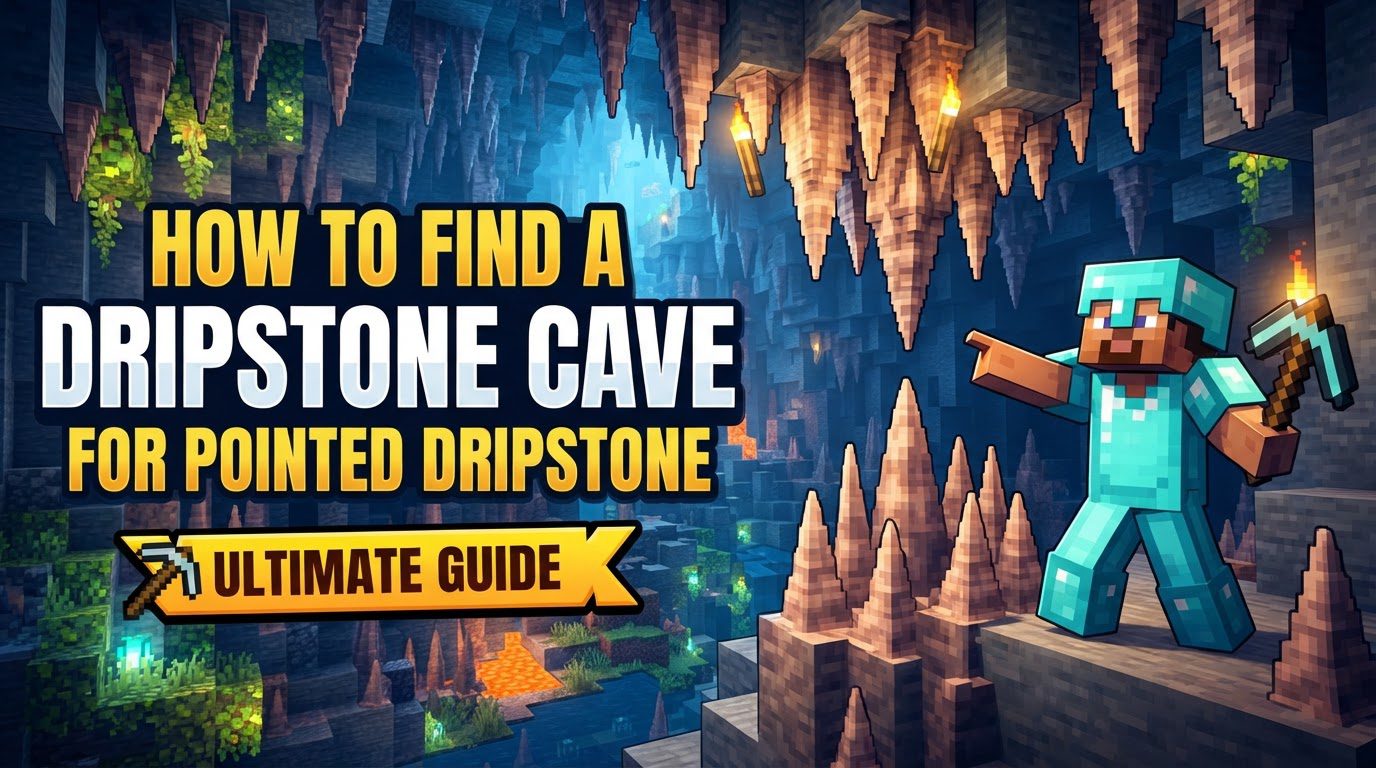
The visual identity of a Dripstone Cave is unmistakable. You will encounter large, intricate formations of dripstone blocks that make up the cave’s structure. More prominently, pointed dripstone appears in two iconic forms: stalactites, which are sharp, conical structures elegantly hanging from the cave ceilings, and stalagmites, their upward-growing counterparts that rise from the cave floors. These formations create a treacherous yet beautiful landscape, making Dripstone Caves a memorable exploration experience.
In terms of generation, Dripstone Caves are found exclusively underground; you will not find any surface indicators for these biomes. They can generate at any height level beneath the surface, meaning your search might take you to various depths. A crucial detail for efficient searching is their preferred generation location: Dripstone Caves are significantly more common in inland areas. This means you are far less likely to discover them under oceans or near coastlines, a factor that should heavily influence your exploration strategy.
Pointed dripstone itself is a versatile block. It can be mined with any tool available to the player, making it accessible even in the early stages of the game. However, for maximum efficiency and speed in gathering this resource, a pickaxe is the most effective tool to use. Beyond simply mining it, pointed dripstone also exhibits an interesting growth mechanic. If a water source block is placed directly above a dripstone block, any pointed dripstone situated below that dripstone block will slowly extend downwards over time, forming longer stalactites. Conversely, a stalagmite can also grow upwards from a solid block if a stalactite is present within 11 blocks directly above it. This mechanic allows for renewable acquisition and manipulation of dripstone formations.
Additionally, Dripstone Caves offer more than just dripstone. These biomes are often home to larger deposits of copper ore, providing an excellent opportunity for players to gather this valuable metal while on their dripstone hunt. This dual resource benefit makes Dripstone Caves a particularly rewarding destination for any determined miner or explorer.
Step-by-Step Guide to Finding Dripstone Caves
Locating a Dripstone Cave for its valuable pointed dripstone requires a systematic approach. By following these steps, you can significantly increase your chances of success:
- Explore underground: The most fundamental and primary method to find a Dripstone Cave is to delve deep into the earth. Since these biomes are exclusively found below the surface, your journey must begin by exploring existing natural cave systems or by initiating your own mining operations. This could involve digging a staircase down, creating a branch mine, or simply following any natural cave entrances you discover. The more extensive your underground exploration, the higher the probability of intersecting with a Dripstone Cave biome. Remember, Dripstone Caves will never be found on the surface, so your search must always be subterranean.
- Look for dripstone formations: As you navigate the intricate networks of underground caves, your primary visual cue for identifying a Dripstone Cave will be the distinctive dripstone formations themselves. Keep a vigilant eye out for the abundance of pointed dripstone, which will manifest as stalactites hanging from the cave ceilings and stalagmites growing upwards from the cave floors. The presence of these unique geological structures, along with the characteristic dripstone blocks making up the cave walls and floor, is the most definitive sign that you have entered a Dripstone Cave biome. These features are unique to this biome and will confirm your discovery.
- Prioritize inland exploration: To optimize your search efforts, it is highly advisable to begin your surface exploration in areas far from large bodies of water. Dripstone Caves have a strong generation preference for inland regions, making them significantly more common in continental landmasses. Conversely, they are rarely found under ocean biomes or in close proximity to coastlines. By starting your initial above-ground scouting in inland areas before digging down, you are playing into the biome’s generation rules, thereby maximizing your chances of encountering a Dripstone Cave beneath. Avoid wasting time searching under oceans where these caves are extremely improbable.
Important Tips for Your Dripstone Cave Expedition
Venturing into Dripstone Caves comes with its own set of challenges and opportunities. Being well-prepared and understanding the biome’s unique mechanics can greatly enhance your experience:
- Be prepared for danger: Dripstone Caves are typically dark environments, which naturally leads to frequent hostile mob spawns. Expect to encounter a variety of hostile creatures, including zombies, skeletons, spiders, and creepers, lurking in the shadows. To ensure your survival and success, always bring adequate armor, reliable weapons, and a generous supply of light sources such as torches or lanterns. Illuminating your path will not only help you navigate but also prevent new mobs from spawning in illuminated areas.
- Use a pickaxe: While pointed dripstone can technically be broken with any tool or even by hand, a pickaxe is the fastest and most efficient tool for gathering it. Equipping yourself with a durable pickaxe, preferably one with efficiency enchantments, will significantly speed up your resource collection, allowing you to gather more pointed dripstone in a shorter amount of time.
- Consider trading: If direct exploration proves difficult or you are in urgent need of dripstone, there are alternative methods of acquisition. Pointed dripstone can occasionally be purchased from Wandering Traders, who appear randomly across your world. Furthermore, dripstone blocks, which are the foundational material for growing pointed dripstone, may be available for trade from Journeyman Mason villagers. These trading options offer a convenient way to obtain dripstone-related items without the need for extensive cave exploration.
- Renewable liquids: Pointed dripstone offers a remarkable utility for creating renewable sources of liquids. Specifically, stalactites – the pointed dripstone formations hanging from ceilings – have the ability to slowly fill cauldrons placed directly beneath them with either water or lava. This mechanism works by placing a corresponding liquid source (water or lava) directly above the dripstone block from which the stalactite hangs. This allows players to establish an infinite source of both water and lava, which is incredibly valuable for various crafting recipes, farming automation, and even aesthetic builds.
Common Mistakes to Avoid When Searching for Dripstone Caves
Awareness of common pitfalls can save you significant time and frustration during your hunt for Dripstone Caves:
- Searching near oceans: A critical mistake to avoid is focusing your search efforts under ocean biomes or close to coastlines. As per their generation rules, Dripstone Caves are very unlikely to generate in these areas. Directing your exploration to maritime regions will almost certainly lead to fruitless endeavors and wasted resources. Always prioritize starting your underground search in inland areas for the best chance of success.
- Expecting surface indicators: Unlike some other biomes that might offer subtle clues on the surface (such as specific tree types or unique terrain features), Dripstone Caves generally do not have any specific surface indicators that reveal their presence below. You cannot simply look at the landscape above ground and accurately predict a Dripstone Cave beneath. Your exploration for these biomes must be entirely subterranean.
- Underestimating fall damage: Dripstone Caves, with their numerous jagged formations, present unique environmental hazards. Falling onto pointed dripstone, whether it be stalactites or stalagmites, will cause damage to your character. Furthermore, if pointed dripstone blocks are dislodged from above and fall onto you, they will also inflict damage. It is crucial to exercise extreme caution when navigating these caves, especially when traversing vertical shafts or areas densely populated with exposed pointed dripstone formations. Consider bringing water buckets for safe descents or equipping boots enchanted with Feather Falling to mitigate potential damage.
Tags:
YOU MAY ALSO LIKE...