Solidifying Concrete Powder Into Concrete (Step by Step)
Understanding Concrete Powder and Its Transformation
Minecraft offers a vast array of building materials, and among the most vibrant and versatile is concrete. However, before it becomes the solid, colorful block we know, it starts as concrete powder. Understanding the mechanics behind concrete powder’s transformation into concrete is crucial for any builder looking to incorporate this material into their creations. This guide will walk you through the essential steps, tips, and common pitfalls to ensure a smooth and efficient conversion process.
Key Mechanics of Concrete Solidification
Concrete powder is a distinctive block with specific properties that govern its behavior and transformation. It’s not like most static blocks you place in the world; instead, it possesses a dynamic quality that players must leverage to achieve its final, hardened form.
- Gravity-Affected Block: One of the most fundamental characteristics of concrete powder is its susceptibility to gravity. Much like sand and gravel, if concrete powder is placed without a supporting block directly beneath it, it will fall until it lands on a solid surface or another gravity-affected block. This property is important to remember when designing systems for large-scale conversion.
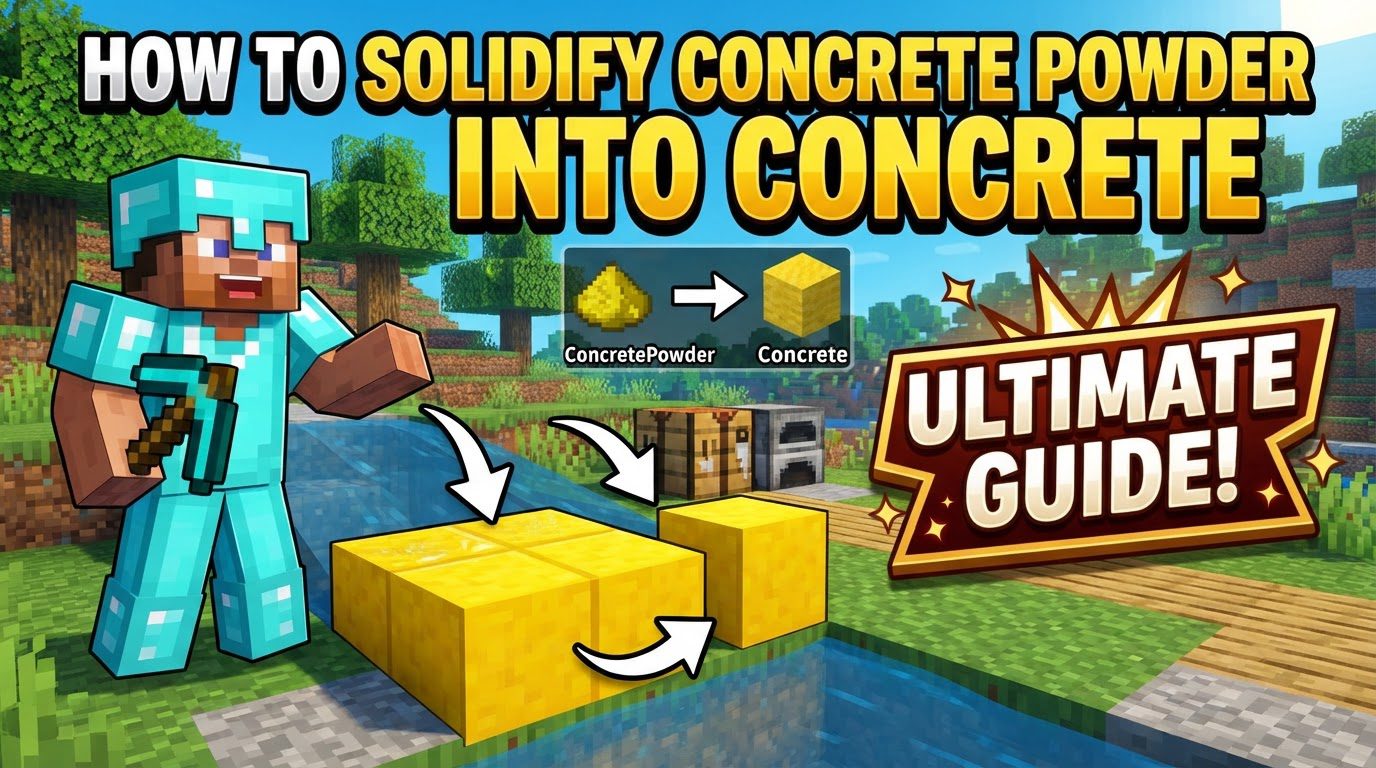
- Solidification Upon Water Contact: The magic happens when concrete powder interacts with water. Its transformation into solid concrete is triggered instantly upon contact with any form of water. This includes direct contact with a water source block, flowing water (which can be a single block of water spreading out), or even simply falling into a body of water. This instant reaction is the core principle behind all concrete production methods.
- Waterlogged Block Interaction: Beyond direct contact, concrete powder can also solidify if placed adjacent to the open sides of waterlogged blocks. Waterlogged blocks are unique in Minecraft as they can occupy the same space as water. Examples include stairs, slabs, or even fences that have been filled with water. Placing concrete powder next to these water-filled block faces will also cause it to solidify, offering more creative ways to trigger the transformation.
- Properties of Solidified Concrete: Once concrete powder has made contact with water and solidified, it transforms into a stable, non-gravity-affected block. This means it will no longer fall and will behave like most other solid building blocks. A significant advantage of concrete is its aesthetic appeal: it comes in 16 vibrant colors, making it an excellent choice for detailed and colorful builds.
Step-by-Step Process to Create Solid Concrete
Converting concrete powder to concrete is a straightforward process once you understand the basic steps. Following these instructions will ensure you can reliably produce hardened concrete for your building projects.
- Craft Concrete Powder: The journey begins with crafting the raw material.
- To craft concrete powder, you will need 4 blocks of sand, 4 blocks of gravel, and 1 dye of any color.
- Place these ingredients into a crafting table. The arrangement of these items within the crafting grid does not matter; as long as all nine slots are used for the ingredients, the recipe will be valid.
- Upon successful crafting, this combination will yield 8 concrete powder blocks. You can choose any color dye to get concrete powder of that specific color.
- Find or Create a Water Source: The next crucial element is water.
- You can locate natural water sources in oceans, rivers, lakes, or underground caves.
- Alternatively, you can create your own water source by using a bucket to pick up water from an existing source block and then placing it down wherever you need it. A single water source block is sufficient for solidification.
- Solidify the Concrete Powder: This is where the transformation occurs.
- The simplest method is to place a concrete powder block directly into a water source block or flowing water. The moment the concrete powder block’s hitbox touches the water, it will instantly convert into a solid concrete block.
- Another effective technique, especially for larger quantities, is to place multiple concrete powder blocks adjacent to each other on a flat surface. Once you have a desired arrangement of powder blocks, use a bucket to pour water over them. The water will flow across the concrete powder, causing each block it touches to solidify.
- Mine the Solidified Concrete: Once hardened, the concrete is ready for collection.
- To collect the solidified concrete blocks, you must use a pickaxe. This is a critical step; using any other tool (like a shovel, axe, or hoe) or attempting to mine it by hand will destroy the concrete block without dropping it as an item. This means you will lose the material entirely.
- Ensure you use a pickaxe made of stone quality or higher for efficient mining.
Important Tips for Efficient Concrete Production
Maximizing efficiency in Minecraft often comes down to knowing the right techniques. Here are some invaluable tips for working with concrete powder and concrete.
- Mining Concrete Powder: When you need to relocate or clear concrete powder before it solidifies, a shovel is the tool of choice. Shovels are specifically designed to quickly mine gravity-affected blocks like sand, gravel, and concrete powder, significantly speeding up the process compared to using other tools or your hand.
- Efficient Concrete Mining: Once concrete has solidified, your pickaxe becomes your best friend. To further enhance efficiency, consider these options:
- Enchantments: Apply the Efficiency enchantment to your pickaxe. Each level of Efficiency increases mining speed, allowing you to break concrete blocks much faster.
- Haste Beacon: For large-scale operations, setting up a Haste beacon is incredibly beneficial. A Haste effect, especially Haste II, dramatically increases mining speed for all blocks, including concrete, making mass collection far more manageable.
- Quick Conversion of Large Quantities: To streamline the conversion process for many concrete powder blocks, consider these advanced techniques:
- Drop into Water System: Design a system where concrete powder blocks are fed or dropped directly into a stream or pool of water. This can be automated using pistons or simply by digging a trench filled with water and dropping the powder from above. As each block hits the water, it instantly hardens.
- Water Trench Placement: Create a long trench or channel filled with water. You can then place concrete powder blocks directly into the water as you walk along the trench. They will solidify instantly, allowing for rapid conversion.
- Off-Hand Placement and Mining: For the most rapid manual conversion, hold concrete powder in your off-hand slot and your pickaxe in your main hand. Face a water block (or a water trench) and then hold down both your primary (place block) and secondary (mine block) mouse buttons simultaneously. As you place concrete powder into the water with your off-hand, it will instantly solidify, and your main-hand pickaxe will immediately mine the newly formed concrete. This technique allows for incredibly fast placement and collection.
Common Mistakes to Avoid
While the process is generally straightforward, certain misconceptions or incorrect actions can lead to frustration and wasted materials. Being aware of these common mistakes will save you time and resources.
- Ineffective Water Sources: Not all forms of water interaction will solidify concrete powder.
- Rain: Rain falling on concrete powder will have no effect; it will not cause solidification.
- Splash Water Bottles: Throwing splash water bottles at concrete powder also does not trigger the transformation.
- Cauldrons: Placing concrete powder on or near a cauldron filled with water will not make it solidify. The concrete powder must make direct block-to-block contact with a water source block, flowing water, or fall into water.
- Dropping as an Item: Concrete powder must be placed as a block to solidify. If you simply drop concrete powder (as an item) into water, it will float on the surface or sink to the bottom like any other item, but it will not transform into concrete. You must right-click to place it as a block.
- Wrong Tool for Mining Solidified Concrete: As mentioned previously, this is a critical mistake. Always use a pickaxe to mine solidified concrete. Using any other tool or your bare hand will destroy the block, preventing it from dropping as an item into your inventory. This results in a complete loss of the crafted concrete.
- Block Update for Single Non-Flowing Water: If concrete powder is placed on a single, non-flowing water block (a water source block that isn’t spreading), it might not solidify immediately. In such specific cases, a block update might be required. This means placing or breaking an adjacent block, or interacting with the water block itself, to trigger the solidification. This is a rarer occurrence but can be confusing if encountered.
- Sand Substitution in Crafting: The crafting recipe for concrete powder is very specific about its sand component. Red sand cannot be substituted for regular sand in the crafting recipe. You must use regular sand blocks to craft concrete powder. Attempting to use red sand will not yield concrete powder.
By following these guidelines and avoiding common pitfalls, you’ll be well-equipped to efficiently produce and utilize all 16 vibrant colors of concrete in your Minecraft builds, adding a new dimension of creativity to your architectural designs.
Tags:
YOU MAY ALSO LIKE...