Hatching a Sniffer Egg, Explained
Obtaining Your Sniffer Egg
Before you can begin the fascinating process of hatching, you first need to acquire a Sniffer egg. There are two primary methods to obtain these rare items, each offering its own adventure and requirements.
-
Discovering Eggs in Warm Ocean Ruins:
One of the primary and most adventurous ways to acquire a Sniffer egg involves deep-sea exploration within Minecraft’s oceans. You must specifically seek out warm ocean biomes to locate their distinctive ruins. Within these ancient, submerged structures, players can discover a unique block known as suspicious sand. To reveal its hidden treasures, which crucially include the elusive Sniffer egg, you must carefully brush the suspicious sand using a brush tool. This delicate archaeological process demands patience and precision, as mishandling the suspicious sand can destroy its contents. The successful discovery of a Sniffer egg through this method provides an immensely satisfying reward, ready for the next stage of hatching.
-
Breeding Adult Sniffers:
Alternatively, if you have already managed to obtain and house two adult Sniffers, you can encourage them to breed and produce additional eggs. To initiate this breeding process, you will need Torchflower Seeds. By feeding a Torchflower Seed to each of your two adult Sniffers, they will enter a ‘love mode’ state. After a brief period, one of the Sniffers will lay a new Sniffer egg. This method offers a sustainable and renewable source of Sniffer eggs once you have established a successful breeding pair, making it an efficient way for players looking to expand their Sniffer population and discover more ancient seeds.
Understanding Sniffer Egg Mechanics
The hatching of a Sniffer egg is governed by several distinct mechanics that significantly influence its speed and overall success. Familiarizing yourself with these details is paramount for giving you the best chance of hatching your Snifflet efficiently and without unnecessary delays.
-
The Hatching Process:
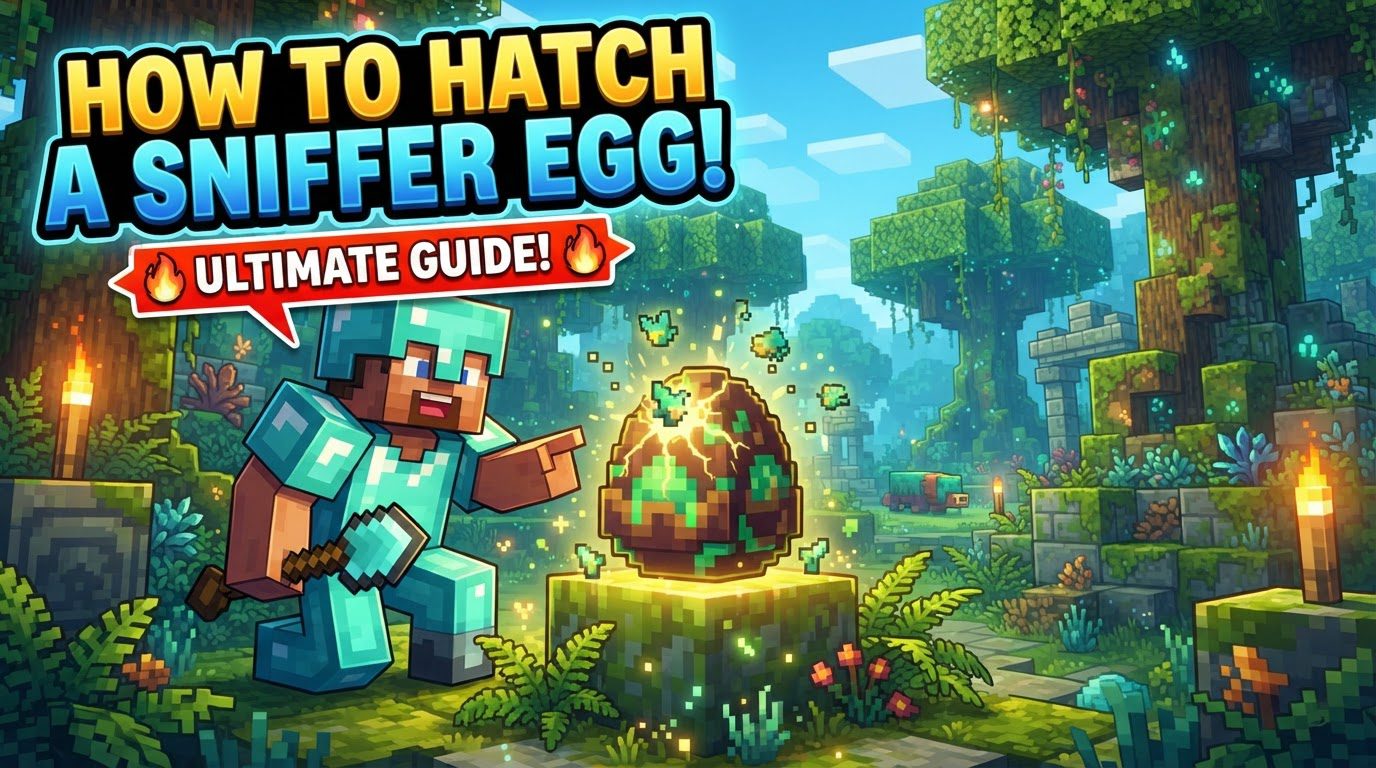
A Sniffer egg does not hatch instantly upon placement. Instead, it undergoes a visual transformation, cracking twice before finally revealing a baby Sniffer, affectionately known as a Snifflet. These two distinct cracks serve as visual indicators of the egg’s progressive journey towards hatching.
-
Impact of Placement Block on Hatching Speed:
Perhaps the most critical factor influencing the hatching time is the type of block the Sniffer egg is placed upon. This seemingly simple choice can dramatically alter how long you will need to wait for your Snifflet to emerge:
- Moss Blocks: When a Sniffer egg is placed directly on a moss block, the hatching process is accelerated dramatically. On these verdant blocks, a Sniffer egg will hatch in approximately 10 minutes of in-game time. This makes moss blocks the unequivocally superior choice for anyone looking to hatch their Sniffer egg as quickly and efficiently as possible, cutting the wait time significantly.
- Any Other Block: If the Sniffer egg is placed on any other type of block – be it dirt, stone, wood, or virtually any other surface available in Minecraft – the hatching time doubles. On these alternative blocks, hatching will take approximately 20 minutes. While still effective, this option requires twice the patience and waiting compared to utilizing a moss block.
The difference is substantial, effectively halving your waiting period simply by making the correct and informed placement choice.
-
Chunk Loading Requirement:
For the Sniffer egg’s hatching timer to actively progress, the specific game chunk in which the egg is placed must be loaded. This critical requirement means that the player must remain within a 128-block spherical radius around the egg. Should you venture too far away, causing the chunk to unload, the hatching progress will immediately pause. The timer will only resume its countdown once you re-enter the 128-block radius and the chunk is reloaded. Therefore, planning to stay relatively close to your egg, perhaps while engaging in other nearby activities or setting up an AFK spot, is essential to ensure continuous hatching progress.
-
Physical Properties of Sniffer Eggs:
Sniffer eggs possess several unique physical characteristics that differentiate them from many other blocks and entities in Minecraft:
- No Supporting Block Needed: Unlike many blocks that require a solid supporting surface beneath them to remain stable, Sniffer eggs do not need one. They can be placed in mid-air if desired, though this is not practically recommended for hatching purposes.
- Immunity to Gravity: Sniffer eggs are not affected by gravity. If placed in a position where a gravity-affected block like sand or gravel would fall, the Sniffer egg will remain suspended in place.
- Easy to Break: Sniffer eggs can be broken with any tool, or even with your bare hand, without requiring any special implements.
- No Silk Touch Required: Crucially, you do not need an enchanted tool with Silk Touch to pick up a Sniffer egg as an item. Breaking it will always yield the egg item itself, allowing for easy relocation if necessary (though frequent moving is not advised, as detailed later).
-
Game Rule Irrelevance:
It is important to note that the
randomTickSpeedgame rule, which affects the speed of certain random events and block updates in Minecraft, has absolutely no influence on Sniffer egg hatching time. Adjusting this setting will not accelerate or decelerate the hatching process for your egg, so do not rely on it as a means of speeding things up.
Step-by-Step Hatching Process
With a solid understanding of the underlying mechanics, here is a clear, step-by-step guide to successfully hatching your Sniffer egg and welcoming a new Snifflet into your world.
-
1. Obtain a Sniffer Egg:
As detailed previously, your very first step is to acquire at least one Sniffer egg. Whether you’ve meticulously brushed suspicious sand in warm ocean ruins or successfully bred two adult Sniffers, ensure you have the egg safely in your inventory to begin the next phase.
-
2. Place the Egg on a Suitable Surface:
Once you have your egg, it’s time for careful placement. For optimal results and the fastest possible hatching time, it is highly recommended to place the Sniffer egg on a moss block. This strategic choice will effectively cut your waiting time in half. Choose a location that is easily accessible and where you can comfortably remain nearby.
-
3. Wait for Hatching and Stay Nearby:
After placing the egg, the waiting game begins. You must remain within a 128-block radius of the Sniffer egg to keep its chunk loaded and allow the hatching timer to progress. During this time, observe the egg. It will visually crack twice, indicating its nearing completion. After the final, second crack, an adorable Snifflet will emerge from the egg, marking the successful end of the hatching process.
Maximizing Your Hatching Success: Important Tips
To ensure the most efficient and trouble-free hatching experience, keep these important tips in mind throughout the process:
- Always Prioritize Moss Blocks: This cannot be stressed enough for efficiency. Placing your Sniffer egg on a moss block is the single most effective way to reduce the hatching time from 20 minutes to a mere 10 minutes. This simple, informed choice saves you a significant amount of waiting time.
- Maintain Proximity for Chunk Loading: Remember that the hatching process only progresses when the egg’s chunk is loaded. Plan to be actively playing or AFK (Away From Keyboard) within 128 blocks of your egg. Consider setting up a temporary base or a comfortable AFK spot near your hatching area to ensure continuous progress.
- Nurture Your Snifflet: Once your Sniffer egg has successfully hatched and you welcome a new Snifflet into your world, your interaction doesn’t end there. To significantly accelerate its growth into a full-sized adult Sniffer, you can feed it Torchflower Seeds. These very same seeds that are used to breed adult Sniffers also act as a powerful growth accelerant for Snifflets. By regularly feeding your Snifflet Torchflower Seeds, you can reduce the time it takes for it to mature, allowing it to quickly grow and begin its valuable work of sniffing out ancient seeds and other unique items hidden beneath the surface.
Common Mistakes to Avoid
While the Sniffer egg hatching process is relatively straightforward, there are several common pitfalls that players should be aware of to prevent frustration, unnecessary delays, or even loss of progress:
- Do Not Place Eggs in Enclosed Spaces: While Sniffer eggs do not possess specific light or air requirements for hatching, they ideally benefit from being placed under open sky. Although it is possible for them to hatch even within fully enclosed spaces, providing an open environment is generally recommended. This approach helps to avoid any potential, albeit rare, unforeseen issues that might arise from restrictive placement, ensuring the most natural and conducive conditions for your Snifflet to emerge.
- Avoid Frequent Egg Manipulation: Once placed, try your best to leave the Sniffer egg undisturbed. Frequently picking up or moving the egg will inevitably reset its hatching timer. Each time you break and re-place the egg, the entire 10- or 20-minute countdown starts anew, completely negating any progress you might have made.
-
Do Not Rely on
randomTickSpeed: As previously mentioned, therandomTickSpeedgame rule has absolutely no impact on Sniffer egg hatching. Do not waste precious time or resources adjusting this setting in an attempt to speed up the process, as it will yield no results for your Sniffer eggs. - Do Not Expect Eggs to Remain Unhatched for Decoration: It is important to understand that Sniffer eggs are not designed for permanent decorative purposes. If you are considering placing them as static elements in your build, be aware that they are programmed to hatch regardless of their environment or any adverse conditions. Even if an egg is placed in seemingly hostile conditions, such as directly in lava or submerged in water, it will eventually hatch. Their fundamental purpose in the game is to bring forth a Snifflet, not to serve as an unhatched, static decoration.
Hatching a Sniffer egg is a truly rewarding experience that adds a unique and ancient touch to your Minecraft world. By diligently following these guidelines, thoroughly understanding the underlying mechanics, and carefully avoiding common mistakes, you’ll soon be welcoming a brand new Snifflet. This adorable creature will quickly grow into a magnificent adult Sniffer, ready to embark on its valuable work of helping you uncover ancient treasures and fascinating new plants. Happy hatching!
Tags:
YOU MAY ALSO LIKE...