Identifying Poplar Tree Color Variants, Explained
Poplar trees represent a charming and visually distinct addition to the diverse flora of Minecraft, introduced in update 26.3. These trees are renowned for their vibrant autumnal foliage, offering players a unique aesthetic experience within the game. Understanding how to identify the specific color variants of poplar trees is key for both explorers seeking out new biomes and builders aiming to incorporate these beautiful blocks into their creations. This guide will provide a comprehensive overview of poplar tree characteristics, their natural habitat, and the methods for distinguishing their various leaf colors.
The Essence of Poplar Trees and Their Habitat
Poplar trees made their debut in Minecraft with update 26.3, immediately standing out due to their striking visual properties. Unlike many other tree types, poplars are exclusively found within a specific new biome known as the “Dappled Forest.” This biome is a spectacle in itself, characterized by an “eternal autumn feel” that perfectly complements the poplar trees’ appearance. The Dappled Forest is immediately recognizable by its distinct environmental features, including vividly orange grass and clusters of bright red bushes, all contributing to a warm, autumnal tapestry.
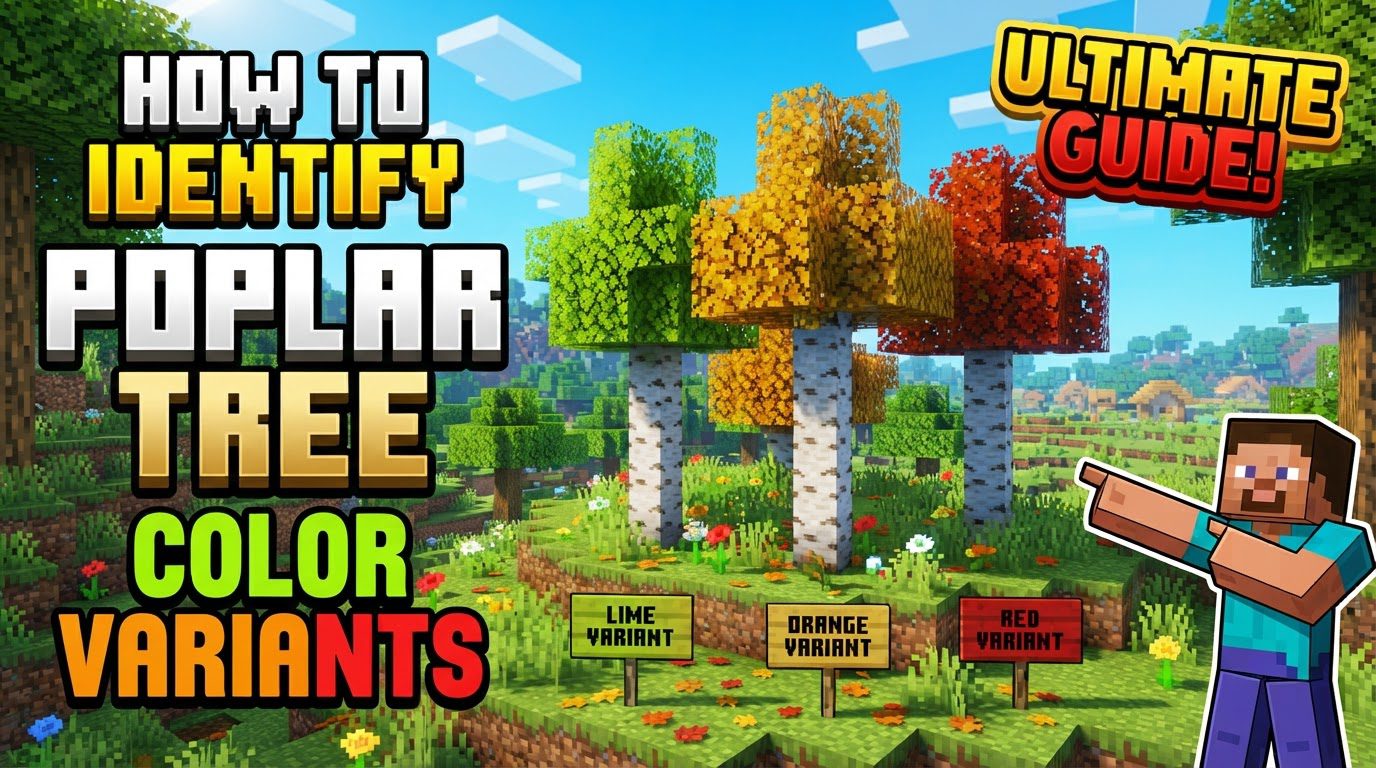
The defining feature of poplar trees, and the primary focus for identification, is their foliage. Poplar leaves are not uniformly green; instead, they naturally display a range of autumnal colors: red, orange, or yellow. This inherent variation is what makes each poplar tree a unique discovery. Beyond their leaves, the wood harvested from poplar trees also possesses a unique aesthetic. It is described as a warm grey with a subtle purple tint, offering a distinct palette for crafting and building projects that sets it apart from more common wood types. This combination of colorful leaves and uniquely tinted wood makes poplar trees a highly sought-after resource for players aiming for specific visual themes in their builds.
Identifying Poplar Tree Color Variants in the Wild
The process of identifying poplar tree color variants begins with locating their natural habitat. Poplar trees do not grow just anywhere; they are exclusive to the Dappled Forest biome. Therefore, the first crucial step is successful biome identification.
- Locating the Dappled Forest Biome: The Dappled Forest biome typically generates in cold climates. This is a vital clue for explorers, as it narrows down the search area considerably. Players should look for biomes that are often associated with colder regions, such as taiga biomes. The Dappled Forest frequently generates near or adjacent to taiga biomes, acting as a strong indicator of its presence. Once you enter a biome with orange grass and red bushes, you have likely found the Dappled Forest, and by extension, poplar trees. The overall “eternal autumn feel” of the biome will be unmistakable.
- Visual Inspection of Trees: Upon entering a Dappled Forest, the next step is to visually inspect the trees within it. These will be the poplar trees. Their autumnal leaves are the primary indicator of their presence and their specific color variant. As you observe the trees, you will notice that their foliage naturally displays one of three distinct colors: red, orange, or yellow. There is no special trick or condition for these colors; they simply appear as part of the tree’s natural generation within the biome. Each tree you encounter will present one of these three vibrant hues, contributing to the rich, diverse landscape of the Dappled Forest.
Growing Poplar Trees and Understanding Color Randomness
While finding poplar trees in their natural habitat allows for immediate identification of their leaf color, players often wish to cultivate these trees from saplings in other areas. The process of growing poplar trees from saplings introduces a specific mechanic regarding their final leaf color.
- Growing from Saplings: When you plant a poplar sapling, its ultimate leaf color is not predetermined or controllable. After the sapling has fully grown into a mature poplar tree, its leaf color will be randomly determined. This means that a single sapling has an equal chance of growing into a poplar tree with red, orange, or yellow leaves. There is no method to influence this outcome, making each grown tree a surprise.
- Observing Grown Trees: The only way to identify the leaf color of a poplar tree grown from a sapling is to simply observe it after it has completed its growth cycle. Once the tree has fully formed, its leaves will display either red, orange, or yellow, reflecting the random determination upon growth. This randomness adds an element of chance to cultivating poplar trees, which can be either exciting for those who enjoy variety or a minor challenge for builders aiming for a very specific color scheme.
Important Tips for Poplar Tree Identification
To ensure accurate identification and a deeper appreciation of poplar trees, keep the following tips in mind:
- Distinctive Autumnal Leaves: Poplar trees are unequivocally distinguished by their colorful autumn leaves. This is their most prominent feature and sets them apart from nearly all other tree types in the game. When you see leaves in vibrant reds, oranges, or yellows that are not part of a seasonal change or a specific resource pack effect on other trees, you are almost certainly looking at a poplar tree.
- Random Sapling Color: Always remember that the leaf color of a poplar tree grown from a single sapling is entirely random. This knowledge is crucial for planning and managing expectations. If you need a specific color for a building project, you might need to grow multiple saplings or search for naturally generated trees of the desired hue.
Common Mistakes to Avoid When Identifying Poplar Variants
Despite their distinct characteristics, there are a couple of common pitfalls players might encounter when dealing with poplar trees and their color variants.
- Expecting Control Over Sapling Color: A frequent mistake is assuming that there’s a method to control the leaf color of a poplar tree grown from a sapling. As previously stated, the color (red, orange, or yellow) is randomly determined upon growth. There are no special conditions, block placements, or environmental factors that can influence this outcome. Players should embrace the randomness or plan accordingly by growing multiple saplings to achieve a desired variety or specific color.
- Confusing Poplar Trees with Other Altered Tree Types: Another common error is confusing poplar trees with other tree types whose leaves might appear altered under specific circumstances. For example, birch leaves, which are typically a light green, can sometimes appear yellow or even orange in certain biomes when using particular resource packs or graphical modification tools like Optifine. It is vital to differentiate these visually altered trees from true poplar trees. Poplar trees’ autumnal colors are inherent to their design and biome generation, not an overlay or modification. Always look for the characteristic Dappled Forest biome, the unique warm grey wood with a slight purple tint, and the natural generation of red, orange, or yellow leaves as intrinsic properties of the tree, rather than a visual effect applied to another tree type. This careful distinction ensures you are truly interacting with poplar trees and their authentic color variants.
By understanding these mechanics and identification techniques, players can fully appreciate and utilize the unique beauty of poplar trees and their delightful array of autumnal colors in Minecraft.
Tags:
YOU MAY ALSO LIKE...