Setting Up a Survival Multiplayer Economy with Plugins — A Quick Guide
Setting up a thriving survival multiplayer economy in Minecraft can transform a basic server into a dynamic and engaging community hub. A well-designed economy provides players with goals, encourages interaction, and adds significant depth to the gameplay experience. This guide will walk you through the essential mechanics, a step-by-step setup process, crucial tips, and common pitfalls to avoid, ensuring your server’s economy is both robust and enjoyable.
Understanding Key Economic Mechanics
A successful in-game economy relies on several core components working in harmony. These elements ensure fairness, balance, and continuous player engagement.
- Currency System: At the heart of any economy is a digital currency. This fungible asset facilitates all in-game transactions, allowing players to buy, sell, and trade goods and services without relying solely on item bartering.
- Supply and Demand: To create a balanced and interesting economy, it’s vital to implement mechanics that influence supply and demand. This can be achieved by making certain assets harder to obtain or by limiting their availability, thereby increasing their value. This encourages exploration, resource gathering, and strategic trading.
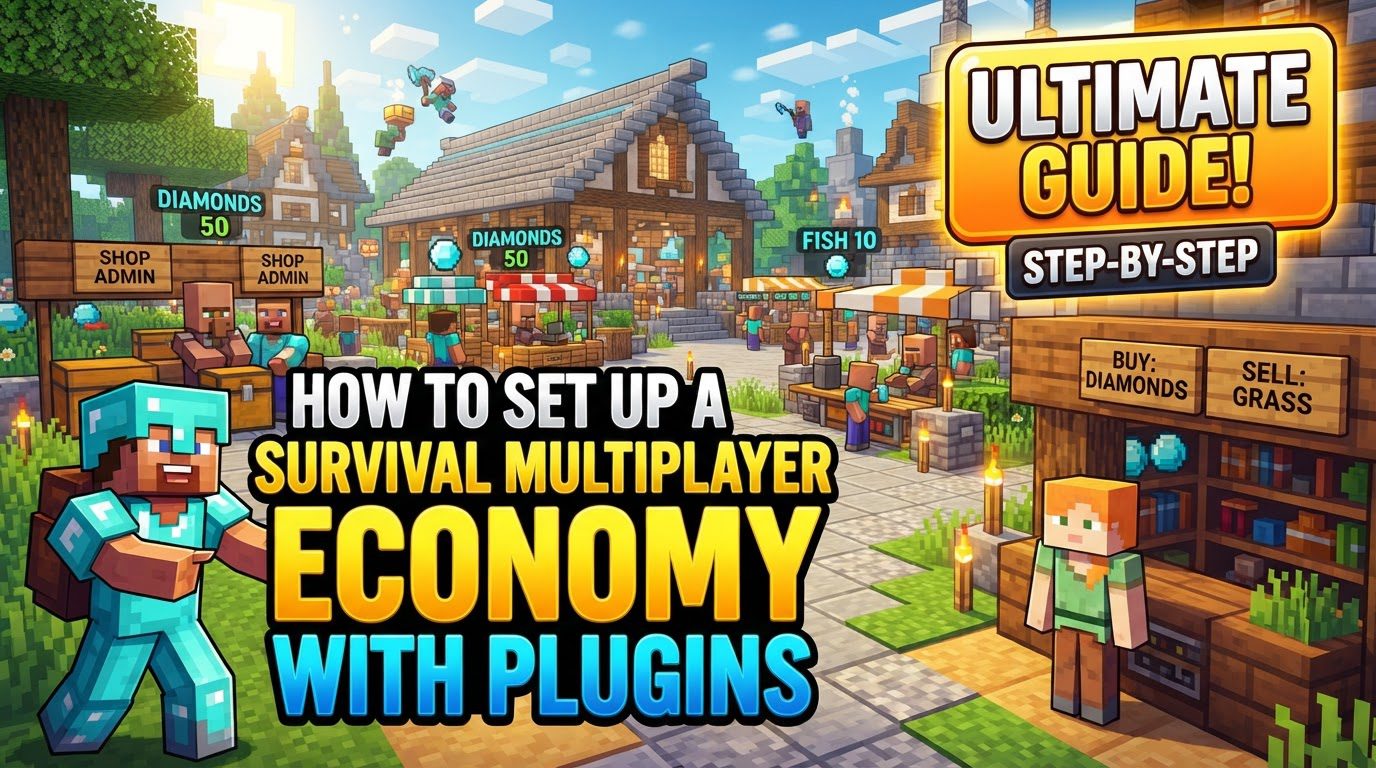
- Player & Admin Shops: Providing avenues for buying and selling is fundamental. Player shops allow community members to trade goods directly with each other, fostering a player-driven market. Admin shops, managed by the server, can be used to introduce base resources or act as a currency sink, helping to regulate the economy.
- Jobs and Money-Making: Players need diverse opportunities to earn currency. Implementing jobs such as mining, farming, or mob hunting provides structured ways for players to generate income through active gameplay, catering to various playstyles.
- Taxation System: To maintain economic equilibrium and prevent excessive wealth accumulation, a taxation system can be introduced. Taxes on transactions or certain activities can help manage the overall money supply and fund server-wide projects or events.
- Banking System: A secure place for players to store their hard-earned money is essential. A banking system, potentially offering interest on deposits, encourages players to save and invest, promoting long-term engagement and economic stability.
- Permissions Management: Controlling who can access and use specific economy features and commands is crucial for security and fairness. A robust permissions plugin allows server administrators to define player roles and restrict certain actions to prevent abuse.
Step-by-Step Economy Setup
Implementing these mechanics requires a systematic approach, starting with the right server software and progressively adding and configuring plugins.
- Select Server Software: The foundation of your plugin-based economy is a compatible server platform. Choose software like Paper, Spigot, or Bukkit, as these are specifically designed to support the wide array of plugins necessary for an economy. These platforms offer enhanced performance and API compatibility for plugin developers.
- Install Core Economy Plugins:
- Vault: This is a critical API (Application Programming Interface) layer. Vault doesn’t add features itself, but it acts as a bridge, allowing various economy, permissions, and chat plugins to communicate and interact seamlessly. It’s often a prerequisite for many other economy-related plugins.
- Main Economy Plugin: Install a foundational economy plugin to manage currency, player balances, and basic financial transactions. EssentialsX Economy is a popular choice, offering a comprehensive suite of features including currency management. Alternatives like CraftConomy3 or Fancy Economy also provide robust economic frameworks.
- Add Supplemental Plugins: Once the core is established, expand your economy with specialized plugins. For player shops, consider options like ChestShop for sign-based trading or EconomyShopGUI for a graphical user interface experience. To offer job opportunities, plugins such as MrUltimateJobs allow players to earn money through various in-game activities. Implement banking systems as desired to provide secure money storage.
- Configure Plugins: Dive into the configuration files of your installed plugins. This is where you’ll customize the specifics of your economy. Adjust settings such as the starting balance for new players, choose your preferred currency symbol (e.g., ‘$’, ‘€’, ‘G’), and set maximum or minimum money limits to prevent inflation or deflation. Each plugin will have its own configuration options to tailor the experience.
- Set Up Shops: Create the physical or virtual spaces where trading occurs. This could involve designing designated market areas with sign-based shops (sell/buy signs), or setting up GUI-driven shops accessible via commands, providing players with intuitive ways to trade items.
- Grant Operator (OP) Status: For administrative control over your server and its plugins, grant yourself operator (OP) status. This is done via the command
/op [YourUsername]in the server console, giving you access to all server commands and plugin functionalities necessary for setup and management. - Manage Permissions: Implement a permissions plugin, such as LuckPerms, which is highly recommended for its flexibility and ease of use. Use this plugin to define different player roles (e.g., ‘member’, ‘vip’, ‘moderator’) and meticulously control their access to specific economy commands and features, ensuring a secure and fair environment.
- Monitor and Balance: An economy is a living system that requires continuous attention. Regularly track the in-game economy, observe player activity, monitor resource supply, and analyze prices. Be prepared to make adjustments to plugin configurations, job payouts, or shop prices as needed to maintain a healthy and balanced economic ecosystem.
Important Tips for a Healthy Economy
Beyond the technical setup, several strategic considerations will help your economy thrive and keep players engaged.
- Introduce Money Sinks: To combat inflation, actively create ways for money to leave the economy. This can include implementing taxes on transactions, charging for land or shop plots, or offering expensive, unique server-managed items that players aspire to purchase.
- Prioritize Plugin Compatibility: Always verify that all chosen plugins are compatible not only with your server version but also with each other. This is especially crucial for economy plugins, which often rely on Vault for seamless interaction. Incompatibility can lead to server instability or broken features.
- Engage with Your Community: Your players are your best resource for economic feedback. Utilize player feedback and gather statistics to understand what commodities are in demand, which jobs are popular, and where adjustments might be needed. A community that feels heard is a loyal community.
- Diversify Earning Methods: Ensure there are multiple avenues for players to earn money. This caters to different playstyles-whether a player prefers mining, farming, building, or fighting-and prevents the economy from becoming monotonous or favoring only one type of activity.
- Consider New Player Assistance: Help new players integrate into your economy smoothly. This could involve providing a small starting fund, offering starter kits, or even implementing a temporary “diamond loan program” to help them get established and participate in the economy sooner.
- Charge for Shop Plots: To add another economic layer and organize your server’s shopping districts, consider selling plots of land where players can set up their shops. This generates income for the server and encourages players to invest in their economic presence.
Common Mistakes to Avoid
Even with the best intentions, certain missteps can undermine your server’s economy and player experience.
- Failing to Plan: Launching a server without a clear vision, a defined niche, or specific economic goals can lead to confusion, an unbalanced economy, and ultimately, player dissatisfaction. A well-thought-out plan is crucial.
- Unbalanced Economy: One of the most significant dangers is allowing an economy to become overpowered. If money is too easy to earn or goods are overly cheap, currency quickly loses its value, leading to inflation and reduced player engagement. Constant monitoring is key to preventing this.
- Neglecting Backups: Not performing routine server backups is a critical oversight. Without regular backups, you risk significant data loss due to griefing, plugin issues, server crashes, or data corruption, potentially wiping out player progress and economic data.
- Inadequate Hardware: Running your server on insufficient RAM or a weak CPU can cause severe performance issues. Lag, slow chunk loading, delayed commands, and frequent crashes will drive players away, regardless of how well-designed your economy is.
- Plugin Overload/Incompatibility: Installing too many plugins, or plugins that conflict with each other, can lead to instability, memory leaks, and poor server performance. Start with essential plugins and add others incrementally, testing for stability at each step.
- Ignoring Server Maintenance: Failing to regularly maintain and update server software and plugins can lead to stability issues, security vulnerabilities, and missed performance improvements. Keep everything up-to-date.
- Disregarding Community Input: Neglecting player feedback is a surefire way to alienate your community. Players often have valuable insights into economic imbalances or desired features. Listen to them to maintain a healthy and engaged player base.
- Reckless OP Assignment: Giving operator privileges to untrustworthy individuals can have disastrous consequences. OP status grants immense power, and abuse can result in server damage, economic manipulation, and a loss of player trust. Assign OP status only to highly trusted administrators.
By carefully considering these aspects and diligently implementing the steps outlined, you can build a vibrant and sustainable survival multiplayer economy that will keep your players engaged and your server thriving for a long time.
Tags:
YOU MAY ALSO LIKE...