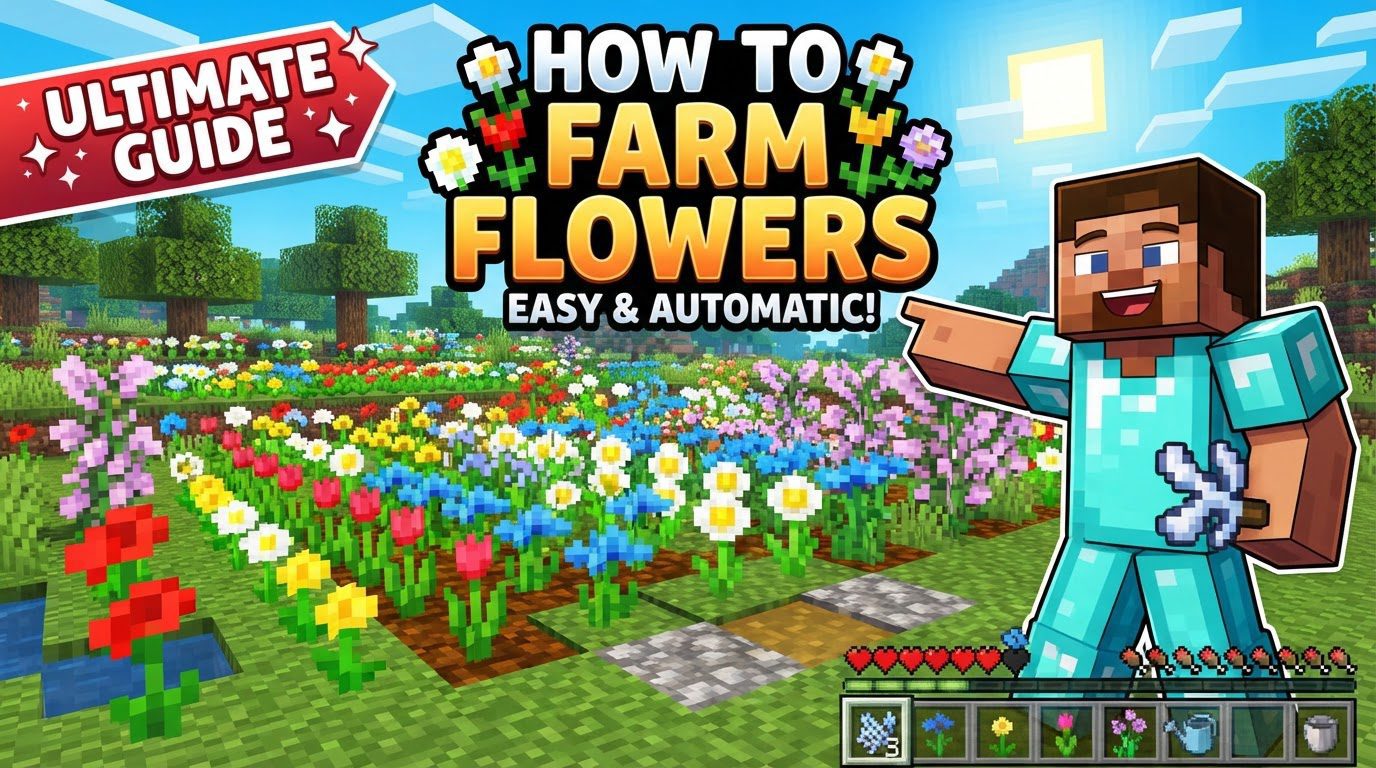
Minecraft How to Farm Flowers
Many aspiring botanists in Minecraft quickly discover a frustrating truth: attempting to cultivate a specific flower in the wrong biome is a surefire way to waste precious bone meal and time. Understanding the intricate, biome-dependent mechanics of flower generation is paramount to establishing a thriving and efficient floral enterprise. Whether you seek vibrant dyes, decorative flair, or a sustainable source of bone meal, mastering flower farming can significantly enhance your Minecraft experience.
The Core Mechanics of Floral Proliferation
At the heart of all flower farming lies one indispensable item: bone meal. This versatile resource acts as the primary catalyst for both generating new flowers and duplicating existing ones, but its application varies significantly depending on the flower type.
- Tall Flowers (Two Blocks High): Varieties such as Sunflowers, Rose Bushes, Peonies, and Lilacs are unique. When you apply bone meal directly to one of these two-block tall flowers, it doesn’t grow taller; instead, it immediately drops an extra item of itself. This makes duplicating these specific flowers incredibly straightforward and highly automatable.
- Short Flowers (One Block High): For single-block flowers like Poppies, Dandelions, Blue Orchids, and Cornflowers, the process is different. Bone meal must be applied to a grass block. Upon application, a random short flower will sprout on that grass block. The crucial detail here is that the type of flower that appears is entirely dependent on the biome in which the grass block resides. For instance, Cornflowers thrive in plains and meadows, while the elusive Blue Orchid is exclusive to swamp biomes.
- Biome Dependency: This cannot be overstated. Each flower has a natural habitat. Attempting to bone-meal grass in a desert will not yield a Poppy, just as trying to grow a Sunflower in a deep ocean biome is futile. Always identify your desired flower first and then locate its native biome.
- Coordinate-Dependent Generation (Java Edition Specific): In particular biomes, like the lush Flower Forest, bone-mealing a specific grass block at certain X/Z coordinates will consistently produce the same type of flower. This means if you find a spot that yields your desired flower, you can reliably farm it from that exact block. This also implies that variety from a single block in a Flower Forest is not guaranteed; you might need to move your farm to different spots to find diverse flower yields.
- Growth Radius and Light Levels: For automated farms, understand that roughly 95% of flower growth from bone-mealed grass blocks occurs within a four-block radius around the source block. Furthermore, to ensure your grass blocks remain viable and don’t revert to dirt, maintain light levels above seven on all grass surfaces, even during the night cycle.
Laying the Groundwork: Preparing Your Floral Fields
Before you can cultivate a bounty of blossoms, careful planning and preparation are essential. The success of your farm hinges on these initial steps.
- Identify Your Desired Bloom and Biome: The very first step is to decide which flower you wish to farm. Once identified, research or explore to find its natural biome. This is non-negotiable for short flowers and still relevant for finding initial tall flowers.
- Prepare Your Growing Area: Locate a suitable flat area within the correct biome. This area should consist of dirt and grass blocks. For manual operations, a small patch suffices, but for automated farms, consider a larger footprint, such as a 9×9 or 12×11 square, to maximize efficiency and collection. Ensure the area is well-lit to prevent grass decay.
Cultivating the Bloom: Step-by-Step Farming Strategies
The method of farming flowers bifurcates based on their height, each offering unique opportunities for manual and automated systems.
For Two-Block Tall Flowers
Farming these is arguably the simplest. Plant a single Sunflower, Rose Bush, Peony, or Lilac. Then, apply bone meal directly to it. It will instantly drop an identical flower item. This process can be repeated indefinitely. For automation, a dispenser loaded with bone meal can be placed to target the tall flower, with redstone mechanisms to trigger it and hoppers underneath to collect the dropped items.
For One-Block Short Flowers
This requires a bit more finesse, especially for automation:
- Manual Bone-Mealing: With bone meal in hand, right-click on any grass block within the desired biome. A flower will instantly grow. You can then break it with your hand or any tool.
- Automated Sprouting and Harvesting:
- Bone Meal Application: Place a dispenser filled with bone meal to target a specific grass block. This grass block must be within the correct biome.
- Breaking Mechanism: Once a flower grows, it needs to be broken. Pistons can be configured to push a block into the flower’s space, breaking it. Alternatively, water streams can be used to wash away flowers as they grow, though this can be less precise for collection.
- Redstone Automation: A Redstone clock circuit is essential to continuously trigger the dispenser to apply bone meal and the piston to break the grown flower. This creates a loop, endlessly generating flowers as long as there’s bone meal.
- Automated Collection Systems: Beneath your growing area, strategically place hoppers or design water streams that flow into hoppers. These will automatically collect all harvested flower items and transport them into chests or other storage systems, preventing loss and ensuring a continuous supply.
Maximizing Your Harvest: Advanced Techniques and Synergies
Beyond the basic mechanics, several strategies can elevate your flower farming to expert levels.
- Sustainable Bone Meal Production: To maintain a continuous flower farm, you need a steady supply of bone meal. Composters are your best friend here. Convert excess seeds, unwanted flowers, saplings, and other organic materials into bone meal. This creates a self-sustaining loop, especially if you’re farming flowers for dye or just for compost.
- Efficiency Through Haste: For large-scale manual clearing or farm maintenance, placing a Haste-infused beacon nearby can dramatically increase your block-breaking speed, allowing for instant destruction of flowers or grass blocks.
- Apiary Alliance: Flowers and Bees: Plant your flowering gardens next to beehives. Bees will visit the flowers, collecting pollen and significantly boosting honey production. This creates a harmonious and productive ecosystem, yielding both flowers and honey.
- Natural Compass: Sunflowers: A unique, often overlooked utility of Sunflowers is their consistent orientation. Every Sunflower, when placed, will always face due east. This makes them an excellent natural compass for navigation.
- Fortune’s Favor: Yield Enhancement: While not applicable to bone-mealing, if you are manually harvesting flowers (especially tall ones, or even short ones after they’ve grown), using a tool enchanted with Fortune can increase the number of items dropped, maximizing your yield per harvest.
- Bedrock’s Bounty: The Hole Trick: In Minecraft Bedrock Edition, a peculiar trick exists: bone-mealing a flower placed in a single-block deep hole can yield an exceptionally high number of flowers, sometimes upwards of 10-20 per bone meal. This is a powerful, version-specific exploit for rapid flower accumulation.
Avoiding Wilting Woes: Common Mistakes to Sidestep
Even the most seasoned players can stumble. Being aware of common pitfalls will save you frustration and resources.
- The Wrong Biome Blunder: As highlighted earlier, attempting to grow biome-exclusive flowers outside their native environment is perhaps the most common mistake. Always double-check your coordinates and the biome type before investing time and bone meal.
- Wasting Bone Meal on Barren Land: Bone meal must be applied to active grass blocks for short flowers to grow. Applying it to stone, dirt (that hasn’t converted to grass), or other unsuitable blocks is a complete waste. Ensure your growth platform is consistently grass.
- Ignoring Inventory Management: Automated flower farms can generate items at an astonishing rate. Without proper collection and storage systems (multiple chests, shulker boxes, or even item sorters), your hoppers will quickly overflow, leading to valuable flowers despawning and being lost forever.
- The Illusion of Variety (Java Edition): In Flower Forests (Java Edition), it’s a common misconception that bone-mealing any grass block will yield a random assortment of flowers. In reality, a specific X/Z coordinate will consistently produce the same flower type. If you need variety, you’ll need to locate different “hot spots” within the biome or create multiple small farms.
Mastering flower farming in Minecraft is a rewarding endeavor, transforming simple grass blocks into vibrant, productive assets. By understanding the core mechanics, leveraging automation, and avoiding common missteps, you can ensure a continuous, bountiful harvest of any flower you desire, bringing color and utility to your blocky world.
Tags:
YOU MAY ALSO LIKE...