Create New Age Corium
One of the most devastating mistakes a budding nuclear engineer in Create: New Age can make isn’t a miscalculation of energy output, but a fundamental oversight in heat management. This oversight can lead to the formation of Corium, a hazardous substance that embodies the ultimate failure of a nuclear reactor system.
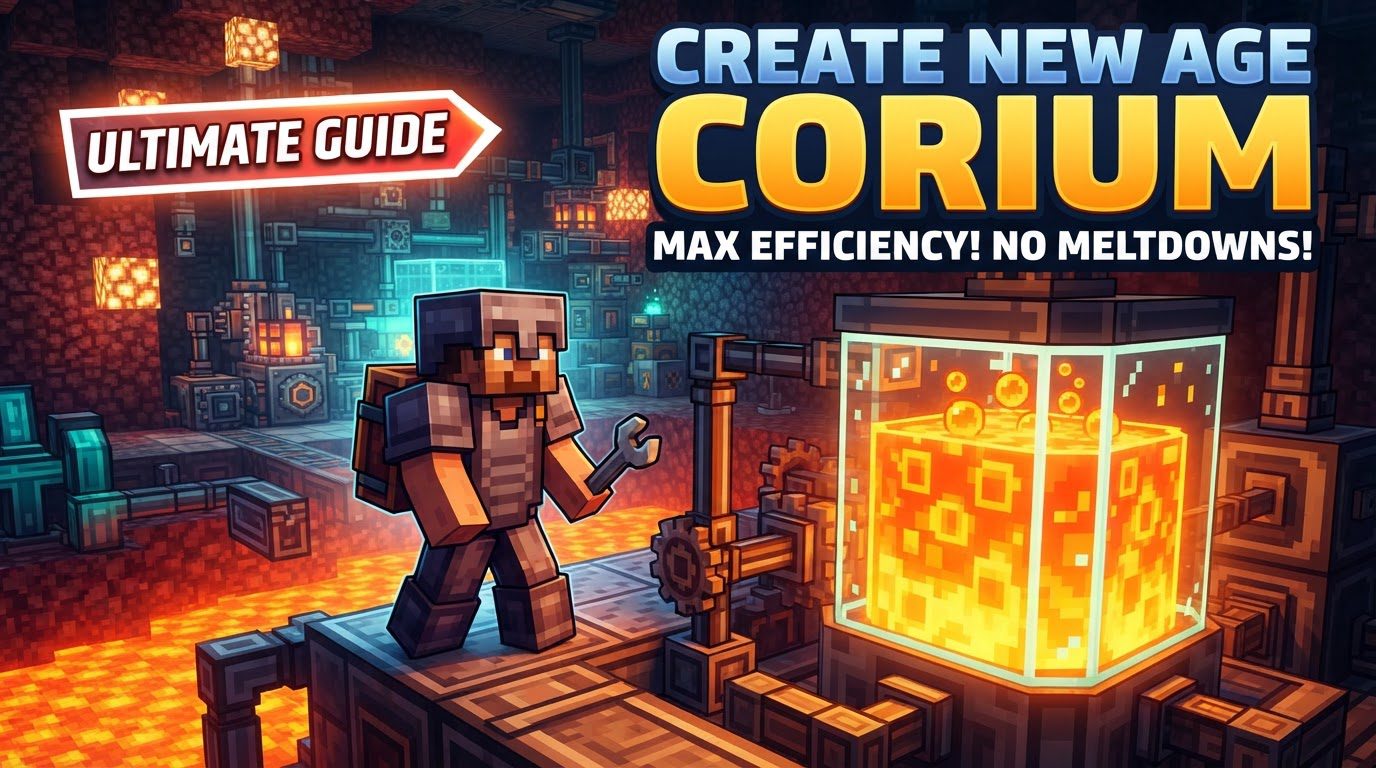
Understanding Corium: A Reactor’s Final Breath
Corium in the Create: New Age mod is not an item you intentionally craft or seek out for its utility. Instead, it is a direct consequence of catastrophic reactor failure – specifically, a nuclear reactor meltdown. It represents a critical breakdown in the intricate process of generating power, signaling that the heat produced by nuclear rods was not adequately removed or utilized. When a reactor overheats to such an extreme that its internal heat pipes melt into lava, the conditions are set for Corium to emerge, transforming the reactor’s core into this dangerous, destructive material.
The Genesis of Disaster: How Corium Manifests
The path to Corium formation is a step-by-step descent into engineering failure, beginning with the construction and operation of a nuclear reactor:
- Constructing the Reactor: The journey starts by assembling a multi-block nuclear reactor. This complex structure typically involves components such as reactor casings, specialized reactor glass, reactor rods for fission, a fuel inserter, and crucial heat vents designed to manage the immense thermal energy generated.
- Fueling the Core: Once built, the reactor requires nuclear fuel. This is usually radioactive thorium, which has been processed to be suitable for reactor use. A fuel inserter is then used to safely place this fuel into the reactor’s core.
- Initiating Heat Generation: Upon fueling, the nuclear rods within the reactor begin their fission process, generating a significant amount of heat. This heat is the energy source the reactor is designed to harness.
- Failure to Dissipate Heat: This is the pivotal moment. If the heat generated by the nuclear rods is not efficiently transferred out of the reactor or effectively utilized (for example, to power steam engines or other machinery), the internal temperature will begin to rise uncontrollably. An effective system of heat vents, heat pipes, and heat pumps is paramount for this dissipation.
- Meltdown Imminent: As internal temperatures soar past safe operating limits, the structural integrity of the reactor’s heat transfer systems begins to fail. Specifically, excessive heat can cause the heat pipes themselves to melt, turning into lava. This signifies a full-blown reactor meltdown, where control over the core’s temperature is lost.
- Corium Emergence: During this meltdown, the superheated core of the reactor – the nuclear rods – undergoes a transformation. It transmutes into Corium, which then begins its destructive descent, boring through anything in its path.
The Scourge’s Path: Corium’s Destructive Properties
Once formed, Corium is far from inert. It is a highly destructive and hazardous substance with distinct properties:
- Unstoppable Descent: Liquid Corium possesses an inherent destructive capability. It will relentlessly burn through virtually all blocks located beneath it, progressively sinking deeper and deeper into the world. This destructive path continues without cessation until it finally reaches bedrock, the unbreakable foundation of the Minecraft world.
- Transformation and Solidification: Upon making contact with bedrock, the liquid Corium undergoes a phase change. It solidifies, transforming into “Frozen Corium” or “Solid Corium.” While no longer actively burning downwards, this solidified form retains many of its dangerous characteristics.
- Pervasive Radioactivity: Both the liquid and solidified forms of Corium are intensely radioactive. Proximity to either will cause continuous radiation damage to any living entities in its vicinity, including players. Furthermore, merely holding Corium blocks in your inventory exposes you to this dangerous radiation, highlighting its extreme hazard.
- Limited “Explosion” Profile: Contrary to real-world fears of nuclear explosions, a reactor meltdown in Create: New Age does not typically result in a massive, world-altering blast akin to a nuclear bomb. The “explosion” associated with Corium formation is generally described as minor, usually contained within a small 2-3 block radius around the reactor. Its primary damage mechanism is environmental, caused by the destructive properties of the Corium it produces, rather than an initial, large-scale concussive force.
Averted Disaster: Strategies for Reactor Stability
Preventing Corium formation is paramount for any Create: New Age player operating a nuclear reactor. It hinges entirely on meticulous design and constant vigilance:
- Mastering Efficient Heat Management: The cornerstone of reactor stability is an effective system for both removing and utilizing all generated heat. Your reactor design must account for the full thermal output of its nuclear rods, ensuring that there’s always sufficient capacity to transfer heat away, whether for power generation or simple dissipation. Over-producing heat without sufficient means to handle it is a direct path to meltdown.
- Vigilant Monitoring of Heat Levels: Always keep a close eye on the heat levels within your reactor and its connected heat transfer systems. Early detection of rising temperatures allows for corrective action before a critical state is reached.
- Cautious Approach to Heat Pumps: Some experienced players advise caution or even avoidance of heat pumps, particularly in early reactor designs. While powerful, they can rapidly increase heat within pipes, potentially leading to localized overheating and melting. Using more standard heat pipes, while perhaps less efficient, might offer a safer, more stable alternative.
- Ensuring Consistent Chunk Loading: Nuclear reactors, like many complex machines in Minecraft, require consistent chunk loading to function correctly. Ensure your reactor is properly chunk-loaded to prevent unexpected behavior, such as thermal runaway or meltdowns, that can occur if parts of the system are unloaded and then suddenly reloaded.
- Proactive Fuel Removal During Overheating: If you observe your reactor beginning to overheat, swift action is crucial. Immediately removing the nuclear fuel from the reactor core is the most effective way to halt further heat generation. This allows the system to cool down safely before you attempt any repairs or modifications.
- Strategic Containment Measures: While Create: New Age meltdowns are not as devastating as real-world nuclear incidents, they still create a significant mess and can destroy large sections of your base. Planning some form of containment, even simple, heat-resistant barriers, around your reactor can mitigate the spread of Corium and its damage.
Radiation Protocol: Protecting Yourself from the Fallout
Operating a nuclear reactor, and especially dealing with Corium, exposes you to radioactivity. Protection is not optional:
- Equip Full Leather Armor: To safeguard yourself from the harmful radiation emitted by both active nuclear reactors and Corium, it is absolutely essential to wear a complete set of leather armor. This means every slot – helmet, chestplate, leggings, and boots – must be filled with a leather piece.
- Consequences of Incomplete Protection: Missing even a single piece of leather armor will leave you vulnerable. Radiation exposure will inflict a range of debilitating negative effects, including nausea, the wither effect, mining fatigue, and poison, significantly hindering your ability to operate or repair your reactor.
Common Missteps: The Perils of Nuclear Engineering
Many reactor failures and subsequent Corium formations can be traced back to a few common mistakes:
- Insufficient Heat Dissipation: This is arguably the most frequent error. Not designing enough heat vents or an adequately sized system of heat pipes and heat pumps to effectively carry away the immense heat generated by the nuclear rods will inevitably lead to overheating.
- Over-producing Heat: Building a reactor that generates more heat than your existing system can efficiently handle or utilize is a recipe for disaster. This mismatch causes a rapid and uncontrolled temperature increase.
- Open Reactor Operation: Running a reactor without fully enclosing it within reactor casing and specialized glass is a critical safety oversight. Not only does this compromise the reactor’s integrity, but it also exposes players to harmful radiation without proper shielding.
- Improper Heat Pump Usage: While powerful, heat pumps can be misused. Employing them incorrectly, or in situations where simpler, less volatile heat pipes would suffice, can cause localized overheating and pipe melting, triggering a meltdown.
- Neglecting Reactor Maintenance: Ignoring early warning signs, such as slowly climbing heat levels or inefficiencies in your heat transfer system, is a grave error. High heat levels can quickly escalate from a minor issue to a full-blown meltdown if left unaddressed.
- Server Crashes/Disconnections: In some multiplayer or unstable server environments, technical issues can lead to unexpected reactor behavior. Server crashes or disconnections can sometimes cause reactor rods to become “disconnected” or malfunction. If not carefully addressed upon restart, these issues can result in an immediate meltdown.
Corium in Create: New Age serves as a stark reminder of the power and peril of nuclear energy. It is not an adversary to be conquered, but rather a consequence to be meticulously avoided through superior engineering, constant monitoring, and a deep respect for the forces at play. Master your heat management, protect yourself from radiation, and your advanced nuclear endeavors will thrive.
Tags:
YOU MAY ALSO LIKE...