How to craft wool stairs and slabs
Minecraft, a universe of limitless creation, is constantly evolving, introducing new elements that empower builders and adventurers alike. Among the most anticipated additions in an upcoming update are wool stairs and slabs. These new building blocks promise to revolutionize aesthetic construction within the game, offering unprecedented versatility for those who love to personalize their digital worlds. This comprehensive guide will walk you through everything you need to know about crafting and utilizing these exciting new wool variants, ensuring you’re well-prepared to integrate them into your next grand design.
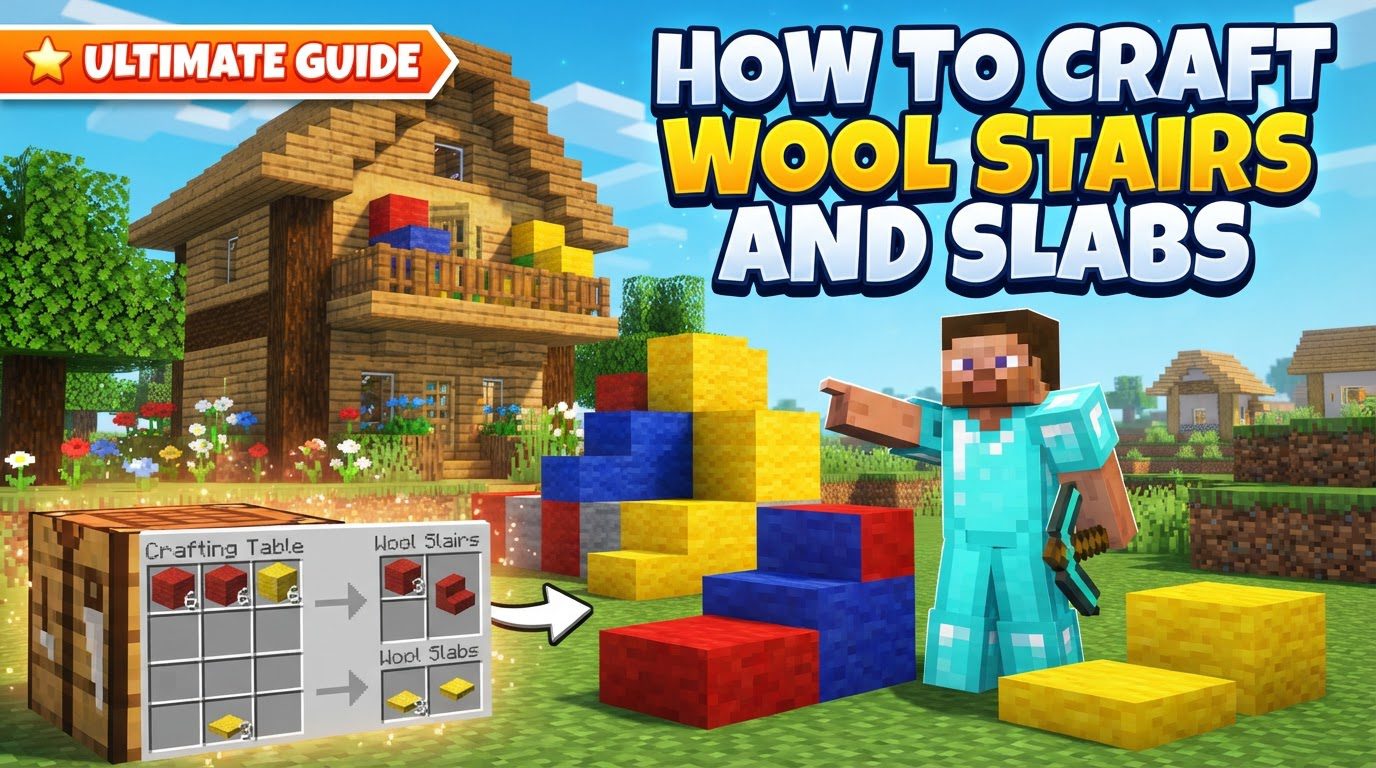
Understanding Wool Stairs and Slabs: Key Mechanics
The introduction of wool stairs and slabs marks a significant expansion of the building palette available in vanilla Minecraft. These aren’t just new decorative blocks; they bring with them the inherent properties of their full wool block counterparts, most notably their ability to dampen vibrations. This feature, often overlooked, can be crucial for redstone contraptions or simply for creating quieter, more serene spaces within your builds. Just like regular wool blocks, these new stair and slab variants will absorb sound and vibration, adding a subtle layer of functionality to their aesthetic appeal.
A key aspect of these new additions is their extensive variety. Minecraft is renowned for its diverse color palette, especially when it comes to wool. With this update, each and every colored wool block currently available in the game will receive its own corresponding stair and slab variant. This means that whether you prefer the vibrant hues of red and blue, the earthy tones of brown and grey, or the classic purity of white, you will have access to stairs and slabs in that exact shade. This commitment to color parity ensures that builders can maintain a consistent and detailed aesthetic throughout their creations, without being limited by material type.
The implications of this addition are vast. Previously, achieving certain architectural details with wool was impossible without resorting to complex block manipulation or modded gameplay. Now, the ability to craft wool into stairs and slabs opens up a world of possibilities for creating intricate designs, smooth transitions, and distinct textures that were once out of reach in the vanilla game. This update truly empowers players to push the boundaries of their creativity, fostering more diverse and detailed constructions than ever before.
Crafting Wool Slabs: A Step-by-Step Process
Crafting wool slabs is a straightforward process, designed to align with the established crafting mechanics for most other slab types in Minecraft. The fundamental principle revolves around arranging a specific number of full wool blocks in a particular pattern within a crafting grid. To begin, you will need access to a crafting table, which provides the necessary 3×3 crafting grid for more complex recipes.
Once you have your crafting table set up, the recipe for wool slabs is as follows:
- Gather Your Materials: You will need three wool blocks. It is absolutely crucial that these three wool blocks are all of the same color. Mixing different colored wool blocks in the crafting recipe will not yield wool slabs, as the game requires material consistency for shaped recipes.
- Access the Crafting Grid: Interact with your crafting table to open the 3×3 crafting interface.
- Place the Wool Blocks: In the crafting grid, place the three identical wool blocks in a single, continuous horizontal row. This means placing one wool block in the first slot, another in the second slot, and the third in the third slot of any of the three rows (top, middle, or bottom). The specific row does not typically matter, as long as they form a straight line.
- Collect Your Slabs: Upon correctly placing the three wool blocks, the output slot on the right side of the crafting interface will display your newly crafted wool slabs. This method typically yields 6 wool slabs from the three full wool blocks you used. This efficient yield makes it easy to produce a large quantity of slabs for your building projects from a relatively small number of full blocks.
The ability to craft slabs provides immense flexibility. Slabs are half-height blocks, meaning they occupy only half the vertical space of a full block. This allows for more granular control over vertical dimensions in builds, creating more nuanced details, shorter steps, or even flush surfaces when placed correctly. Their introduction in wool form means these design possibilities now extend to every color of wool, opening up new avenues for decorative and functional applications.
Crafting Wool Stairs: Understanding the Probable Method
While the precise, officially confirmed crafting recipe for wool stairs in vanilla Minecraft has not yet been widely detailed in all available information, we can rely on the established patterns for crafting stairs from other materials. Minecraft’s crafting system is highly consistent, and it is highly probable that wool stairs will follow this standard crafting pattern, which involves arranging six blocks of the same material in a stair-like configuration within the crafting grid.
To prepare for crafting wool stairs, you will, once again, require a crafting table. The 3×3 grid it provides is essential for forming the specific shape required for stair recipes. Here’s how the probable crafting process will unfold:
- Secure Your Wool: You will need six full wool blocks. As with slabs, these six wool blocks must all be of the same color to ensure the recipe is recognized. Any deviation in color will prevent the recipe from being successful.
- Open the Crafting Interface: Engage with your crafting table to bring up the 3×3 crafting grid.
- Arrange the Wool Blocks in a Stair Pattern: The standard crafting pattern for stairs involves placing six blocks in a diagonal or stepped arrangement across two rows. A common and highly probable pattern is to fill the bottom row with three wool blocks, then place two wool blocks in the middle row (typically in the first two slots, leaving the third empty), and finally, place one wool block in the top row (usually in the first slot). This creates a distinct ‘L’ shape or a stepped diagonal pattern that visually represents a stair.
- Retrieve Your Stairs: Once the six wool blocks are correctly arranged in this stair-like pattern, the output slot will display your crafted wool stairs. Typically, this recipe yields a batch of stairs, often four, though the exact number for wool stairs will be confirmed upon their official release.
The introduction of wool stairs is a game-changer for builders seeking to create soft, inviting, and colorful interior spaces. Previously, stairs were limited to harder materials like wood, stone, or bricks. Now, with wool stairs, you can seamlessly integrate soft, carpeted staircases into your homes, castles, or any other structure, maintaining a consistent aesthetic and leveraging the vibration-dampening properties of wool throughout. This allows for a much more cohesive and luxurious feel in architectural designs, opening up new avenues for creative expression.
Maximizing Your Builds: Important Tips for Wool Stairs and Slabs
The addition of wool stairs and slabs provides builders with an unprecedented array of new creative possibilities. These blocks are not merely functional; they are powerful aesthetic tools that can transform the look and feel of your Minecraft constructions. Understanding how to best utilize them will elevate your building prowess.
- Enhanced Aesthetic Variety: With stairs and slabs available in every wool color, you can now add incredible depth, detail, and texture to your structures. Imagine vibrant, multi-colored staircases, or intricately patterned floors that flow seamlessly from full blocks to slabs. The half-block nature of slabs allows for much finer detail in facades, intricate roofing designs, and custom furniture.
- Crafting Soft Furnishings: One of the most exciting applications is the ability to craft realistic and soft-looking furniture. Wool slabs, when combined, can create convincing couches, benches, and even beds with a softer appearance than their wooden or stone counterparts. By combining slabs and stairs, you can design comfortable-looking armchairs, custom seating arrangements, and elaborate decorative elements that truly feel part of a cozy interior. The smooth transitions offered by stairs also make for excellent, gentle ramps or decorative architectural accents.
- Creating Carpeted Floors and Pathways: While full wool blocks have always served as carpet, wool slabs offer a new dimension. You can now create raised carpeted areas, subtle floor patterns, or even intricate rug designs that integrate more smoothly with other block types. The half-height of slabs can also be used to create detailed pathways or decorative borders that add visual interest without consuming an entire block space.
- Resource Efficiency and Reversibility: An excellent feature of wool slabs is their reversibility. If you find yourself with an excess of wool slabs or decide you need full wool blocks for another project, you can easily convert them back. By placing two wool slabs of the same color into any crafting grid (even your 2×2 inventory crafting grid), they will combine to form one full wool block. This provides a valuable layer of resource management, ensuring that your materials are never truly wasted and can be repurposed as needed. This flexibility is particularly useful when experimenting with designs or when your resource requirements shift during a build.
These tips highlight just a fraction of what’s possible. The true potential of wool stairs and slabs lies in the imagination of the builder, offering tools to create more detailed, colorful, and inviting spaces than ever before in vanilla Minecraft.
Avoiding Misinformation: Common Mistakes and Historical Context
As with any significant update to a long-running game like Minecraft, it’s crucial to distinguish between new, official content and older, unofficial information. When it comes to wool stairs and slabs, there are a few common mistakes and points of confusion that players should be aware of to ensure they are working with accurate information.
- Prior Absence in Vanilla Minecraft: It is important to understand that prior to these recent updates, wool stairs and slabs were simply not available in the base, unmodded version of Minecraft. For many years, builders often wished for these blocks, but they were absent from the vanilla game. This means that any older sources or tutorials discussing wool stairs and slabs would likely have been referring to content from third-party modifications.
- Distinguishing from Mods: The Minecraft modding community is incredibly creative, and many mods have, for a long time, offered items similar to wool stairs and slabs. For instance, some older sources or mod packs (like those incorporating parts of Tinkers’ Construct, which sometimes extends block variety) might have included such items. However, the information provided in this guide pertains specifically to their official, native inclusion in the base game. This distinction is vital because modded content requires specific game versions and installations, whereas official vanilla content is accessible to all players on the updated version of the game.
- Importance of Up-to-Date Information: Given the dynamic nature of game development, it is always best to consult the most current and official sources for crafting recipes and game mechanics. Relying on outdated information, especially concerning items that were previously mod-only, can lead to frustration and wasted time in-game. Always ensure your game is updated to the version that includes these new blocks.
- Focus on Official Inclusion: This guide strictly adheres to the facts surrounding the official introduction of wool stairs and slabs into vanilla Minecraft. While mods have historically filled gaps in vanilla gameplay, the current discussion centers on these blocks becoming a standard part of the Minecraft experience for everyone, without the need for external installations. This guarantees a consistent experience across all vanilla game environments once the update is released.
By keeping these points in mind, players can avoid common pitfalls and confidently utilize wool stairs and slabs as they become an official and integral part of the Minecraft building toolkit. The journey of Minecraft is one of continuous evolution, and staying informed about the latest official additions ensures the best possible creative experience.
Tags:
YOU MAY ALSO LIKE...